

Week thirty-nine of pregnancy is one of the most sensitive and exciting stages of pregnancy. At this point, labor can begin at any moment. During this week, both the mother’s body and the baby are almost fully prepared for birth, and many mothers are eager to learn about the signs of labor, the baby’s condition, and the essential steps to take during this time.
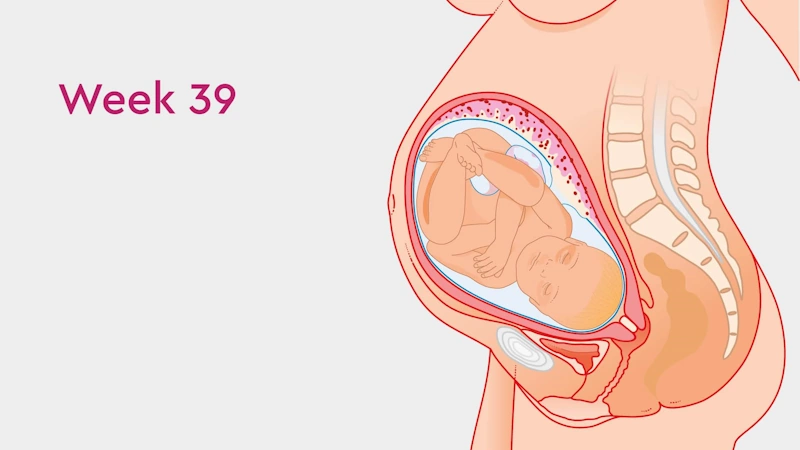
At week 39 of pregnancy, your baby measures approximately 50–51 centimeters from head to heel and weighs close to that of a full-term newborn. The baby is often compared to the size of a watermelon. At this stage, the baby’s skin becomes thicker and more resilient, forming its final protective layers in preparation for life outside the womb.
Fetal Development in Week Thirty-Nine of Pregnancy
By week thirty-nine, your baby has nearly completed physical development and is ready to enter the outside world. Facial features are fully formed, the eyes can open, and the ears are positioned properly on both sides of the head. Hair may be thick or have a color different from the parents’, which is completely normal.
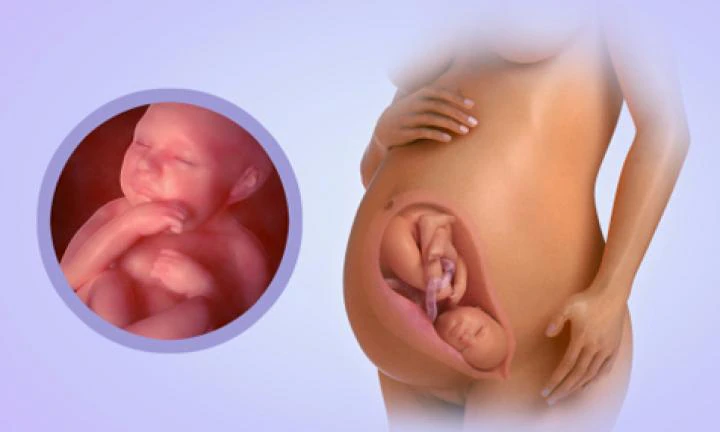
At this stage, the baby’s body has grown sufficiently, and the proportion of the head to the body is close to its final ratio, with the head making up about one-quarter of the total body length. As space in the uterus becomes limited, fetal movements may feel stronger and more like pressure or firm kicks against the uterine walls.
One of the most important characteristics of week 39 is the flexibility of the baby’s skull bones. The bones of the skull are not yet fully fused, allowing the baby to pass more easily through the birth canal. For this reason, the newborn’s head may appear slightly cone-shaped or elongated at birth, but this usually returns to a normal shape within 24 to 48 hours.
Baby’s Weight and Size in Week 39 of Pregnancy
In week thirty-nine of pregnancy, the baby’s weight typically ranges between 2.5 and 3.5 kilograms, with an average of about 3.2 kilograms. The baby’s length is usually between 48 and 51 centimeters, making the baby very similar in size to a newborn after delivery.
Birth weight is an important indicator of a baby’s health. Studies show that babies born weighing less than 2.5 kilograms or more than 4 kilograms may have a higher risk of certain health issues later in life and may require closer monitoring.
Overall, week 39 represents an ideal stage in which the baby has achieved full physical growth and organ development, making birth during this week completely normal.
The Mother’s Body in Week Thirty-Nine of Pregnancy
Week thirty-nine is when the mother’s body reaches its peak readiness for labor. Even if you have attended childbirth preparation classes and learned about contractions, breathing techniques, massage, position changes, and pain management, labor can still bring unexpected experiences.
In the early stages of labor, you may feel as though you have forgotten everything you learned. Some women experience a mental “freeze,” making it difficult to focus on breathing or labor positions. This reaction is completely normal. For this reason, it is helpful if your partner or birth companion is familiar with breathing techniques and labor positions so they can guide and support you when needed.
During labor in week 39, the body may react in ways that seem unusual but are completely normal. Shivering or teeth chattering occurs in about half of women during labor and is usually caused by hormonal changes and increased adrenaline. This is generally harmless, even if body temperature rises slightly.
Nausea and vomiting are also common. During labor, digestion slows down, and if food remains in the stomach, nausea or vomiting may occur during strong contractions. Some pain-relief medications can also lower blood pressure and cause temporary nausea.
Making sounds, moaning, or even shouting during labor is also normal. Vocalizing helps release energy and can improve a woman’s ability to cope with contractions and push effectively during the second stage of labor. Emotional reactions toward medical staff or a partner may occur and should not be a source of embarrassment—healthcare teams are well accustomed to these situations.
About Yourself in Week Thirty-Nine of Pregnancy
During this week, most of your focus is on your baby’s arrival, but it is also important to consider your partner’s feelings. While you may be receiving advice from friends and family, your partner may be feeling anxious or fearful about the upcoming birth and new responsibilities.
Talking openly and involving your partner in the labor process can help reduce stress for both of you and make the experience more manageable.
The Role of the Partner in Week 39 and During Labor

An informed and supportive partner can significantly reduce stress and discomfort during labor. Helpful actions include:
-
Staying with you during early labor at home, walking together, or watching a movie
-
Massaging the lower back to ease contraction pain
-
Helping you get in and out of the shower
-
Preparing light snacks such as fruit or grains
-
Timing contractions
-
Talking to you between contractions and providing reassurance
Signs of Labor in Week 39 of Pregnancy and When to Go to the Hospital
In week thirty-nine, both your body and your baby are usually fully prepared for labor. However, distinguishing between true labor and false labor is essential, as timing your hospital visit can affect the labor process.

Regular and Painful Uterine Contractions
The most important sign of labor is regular, painful contractions that:
-
Occur at consistent intervals
-
Become stronger, longer, and closer together
-
Do not improve with rest, hydration, or position changes
Unlike Braxton Hicks contractions, true labor contractions intensify over time and often radiate to the lower back, pelvis, and lower abdomen.
Pelvic Pressure and Baby Dropping
You may feel strong pressure in the pelvis, rectum, or vagina as the baby’s head moves lower into the pelvis, which can signal approaching labor.
Bloody Show
The release of mucus mixed with blood, known as the “bloody show,” indicates gradual cervical dilation and may occur hours or days before labor begins.
Rupture of Membranes (Water Breaking)
Water breaking may feel like a sudden gush or a slow leak of fluid. The fluid is usually clear or pale yellow and odorless.
If your water breaks, you should go to the hospital immediately, even if contractions have not started.
Persistent Lower Back Pain
Some women experience constant lower back pain or menstrual-like cramps that intensify with contractions.
When Should You Go to the Hospital in Week 39?
You should seek immediate medical care if you experience:
-
Regular contractions every 5 minutes lasting at least 1 minute for over an hour
-
Rupture of membranes
-
Heavy bleeding
-
Decreased or absent fetal movements
-
Severe or unbearable pain
-
Fever, dizziness, or blurred vision
Women with a history of rapid labor or high-risk pregnancy may be advised to go earlier.
What If Labor Does Not Start by the End of Week 39?
Not going into labor by the end of week 39 is very common and usually not a cause for concern. A full-term pregnancy typically ranges from 37 to 40 weeks, and many women naturally deliver in week 40 or early week 41.
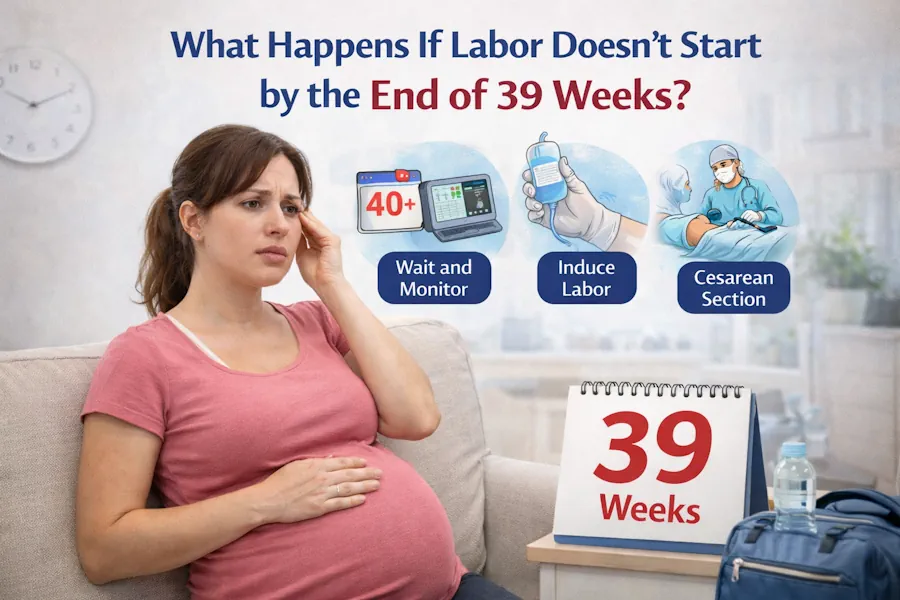
If labor has not started, your healthcare provider will monitor both you and your baby through cervical exams, amniotic fluid assessment, fetal heart rate monitoring, and evaluation of fetal movements.
If both mother and baby are healthy, waiting a few more days is often recommended.
When Is Labor Induction Considered?
Labor induction may be suggested if:
-
Pregnancy extends beyond 40–41 weeks
-
Amniotic fluid levels decrease
-
Fetal movements decrease
-
The mother develops high blood pressure or gestational diabetes
-
Signs of fetal distress appear
Induction methods may be medical or mechanical, depending on cervical readiness and maternal condition.
Is Cesarean Section Inevitable?
No. Failure to start labor by week 39 does not automatically mean a cesarean section is required. Many women still deliver vaginally, even after induction. The decision depends on maternal and fetal conditions and response to induction.
Recommended Diet for Week Thirty-Nine of Pregnancy
Nutrition in week 39 plays an important role in maintaining maternal energy, preparing the body for labor, and supporting fetal health. The focus should be on light, nutritious, and easily digestible foods.

Recommended Foods
-
Lean proteins: fully cooked chicken or fish, eggs, legumes, low-fat dairy
-
Healthy carbohydrates: whole-grain bread, rice, boiled potatoes, oats
-
Fruits and vegetables: apples, bananas, pears, cooked vegetables, light salads
-
Adequate fluids: water, diluted natural juices, light soups
Foods to Limit
-
Fried and fatty foods
-
Spicy foods
-
Carbonated drinks
-
Excess caffeine
-
Sugary foods
Can Certain Foods Trigger Labor?
There is no strong scientific evidence that foods such as pineapple, spicy meals, or dates reliably induce labor. However, moderate consumption of dates in late pregnancy may help cervical ripening, under medical guidance.
Exercise Suitable for Week Thirty-Nine of Pregnancy
Physical activity at this stage should be gentle and safe, focusing on comfort rather than fitness.

Benefits of Light Exercise
-
Improves circulation
-
Reduces muscle and back pain
-
Decreases anxiety and improves sleep
-
Prepares the body for vaginal birth
Safe Exercises
-
Gentle walking
-
Mild stretching
-
Breathing and relaxation exercises
-
Pelvic movements
-
Prenatal yoga (if previously practiced)
Exercises to Avoid
-
High-intensity workouts
-
Jumping or high-impact movements
-
Lying flat on the back for long periods
-
Balance-challenging exercises
When to Stop Exercising
Stop and contact your healthcare provider if you experience:
-
Severe abdominal or pelvic pain
-
Regular painful contractions
-
Bleeding or fluid leakage
-
Dizziness or palpitations
Frequently Asked Questions About Week Thirty-Nine of Pregnancy
Is labor at 39 weeks of pregnancy safe?
Yes. Labor at 39 weeks is considered completely safe and normal. At this stage, the baby is full-term, and vital organs such as the lungs, brain, and digestive system are fully developed. Babies born at 39 weeks generally adapt well to life outside the womb.
Is it normal to have no signs of labor at 39 weeks?
Yes. It is very common not to experience labor signs at week 39. Many women naturally go into labor during week 40 or even early week 41. As long as fetal movements are normal and medical checkups are reassuring, there is usually no cause for concern.
What are the most reliable signs that labor has started at 39 weeks?
The most reliable signs of true labor include:
-
Regular, painful contractions that increase in strength and frequency
-
Contractions that do not stop with rest or hydration
-
Pain that radiates to the lower back or pelvis
-
Cervical dilation confirmed by a healthcare provider
False labor contractions (Braxton Hicks) are irregular and usually subside with rest.
How can I tell the difference between false labor and true labor?
False labor contractions are irregular, unpredictable, and often improve with rest or position changes. True labor contractions occur at regular intervals, become stronger over time, and continue regardless of movement or hydration.
Is decreased fetal movement normal at 39 weeks?
While fetal movements may feel different due to reduced space in the uterus, a noticeable decrease in movement is not normal. If you feel fewer movements than usual, you should contact your healthcare provider or go to the hospital immediately.
What should I do if my water breaks but I have no contractions?
If your water breaks at 39 weeks—even without contractions—you should go to the hospital right away. Rupture of membranes increases the risk of infection and requires medical evaluation.
Can labor start suddenly at 39 weeks?
Yes, labor can sometimes progress quickly, especially in women who have given birth before. However, most labors begin gradually. If you have a history of rapid labor, your provider may recommend going to the hospital earlier.
Is it possible to need vacuum or forceps assistance at 39 weeks?
Yes. In some vaginal deliveries, vacuum or forceps may be used to assist delivery if labor is prolonged or if the baby needs to be delivered quickly. When used appropriately by trained professionals, these tools are generally safe.
Is sexual intercourse safe at 39 weeks of pregnancy?
In low-risk pregnancies without medical restrictions, sexual intercourse is usually safe at 39 weeks. Mild contractions after intercourse can occur and are typically harmless. You should avoid intercourse if you have vaginal bleeding, ruptured membranes, or your doctor has advised against it.
Can certain foods naturally induce labor?
There is no strong scientific evidence that specific foods reliably induce labor. While foods like dates, pineapple, or spicy meals are often discussed, their effects are not proven. Moderate date consumption late in pregnancy may support cervical ripening under medical guidance.
Should I reduce physical activity at Week 39 of Pregnancy?
You do not need to stop activity entirely, but exercise should be gentle. Walking, stretching, breathing exercises, and prenatal yoga (if previously practiced) are safe. Avoid strenuous or high-impact activities.
When should I go to the hospital at Week 39 of Pregnancy?
You should go to the hospital if you experience:
-
Regular contractions every 5 minutes for at least one hour
-
Rupture of membranes
-
Vaginal bleeding more than spotting
-
Decreased or absent fetal movement
-
Severe pain, fever, dizziness, or blurred vision
What happens if labor does not start by the end of week 39?
Not going into labor by the end of week 39 is normal. Many women deliver naturally in week 40. Your healthcare provider will continue monitoring your baby’s well-being and may discuss induction if medical indications arise.
Does not going into labor at Week 39 of Pregnancy mean I will need a cesarean section?
No. Lack of labor at 39 weeks does not automatically mean a cesarean section is required. Many women deliver vaginally after spontaneous labor or induction, depending on maternal and fetal conditions.
Is anxiety common at 39 weeks of pregnancy?
Yes. Anxiety and emotional sensitivity are very common at this stage. Hormonal changes, anticipation of labor, and concern for the baby all contribute. Talking with your partner, healthcare provider, or practicing relaxation techniques can help.
What is the most important thing to focus on during Week 39 of Pregnancy?
The most important priorities are monitoring fetal movements, recognizing true labor signs, maintaining proper nutrition and hydration, and staying in close contact with your healthcare provider.
Final Summary of Week Thirty-Nine of Pregnancy
Week thirty-nine is a critical stage when the baby is fully developed and the mother’s body is maximally prepared for birth. Whether labor starts or not during this week can be completely normal.
Understanding labor signs, monitoring fetal movements, maintaining proper nutrition and gentle activity, and seeking timely medical care are key to ensuring a safe delivery.
Every pregnancy is unique. If you experience unusual symptoms, decreased fetal movement, or uncertainty about labor signs, consult your obstetrician without delay.
Your health and your baby’s well-being are always the top priority.





No comment