
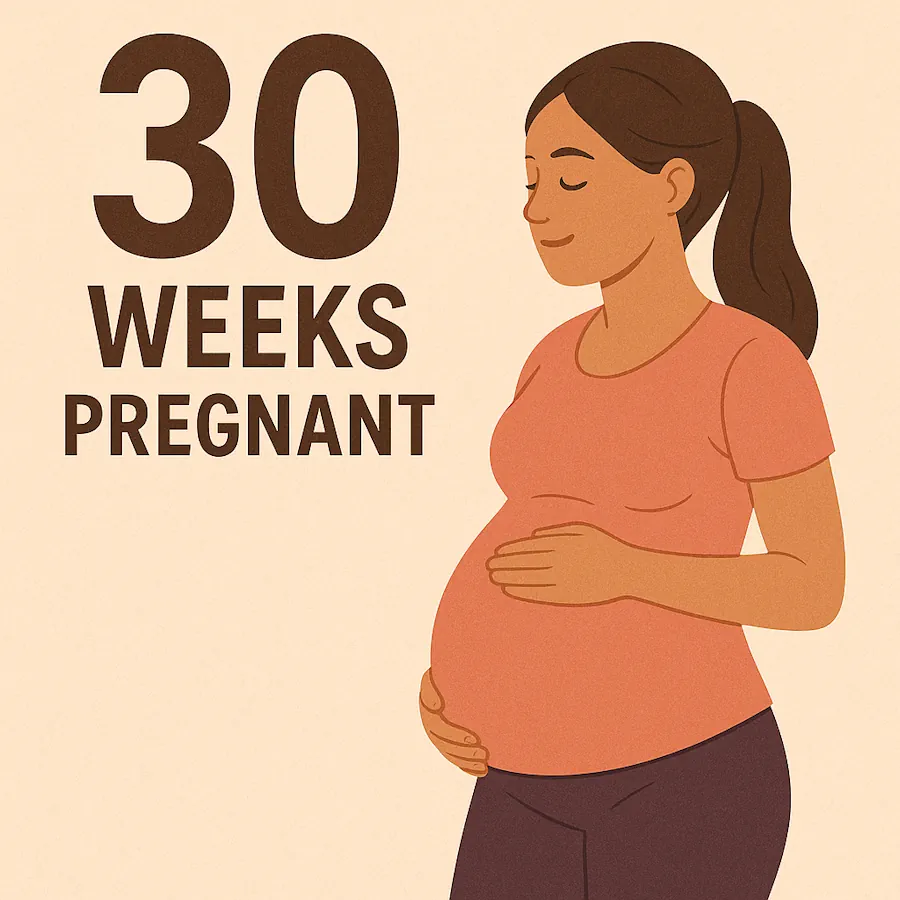
Week 30 of pregnancy is one of the most sensitive and exciting weeks of the third trimester. At this stage, the baby is approximately the size of a large cabbage, and rapid growth continues. The fine hair covering the baby’s body (lanugo) gradually begins to shed, while the hair on the scalp starts to grow thicker.
During this week, the mother may experience Braxton Hicks contractions, which are usually irregular and not severely painful. However, if these contractions are accompanied by pain, pelvic pressure, or abnormal vaginal discharge, immediate medical evaluation is necessary.
Fetal Development in Week 30 of Pregnancy
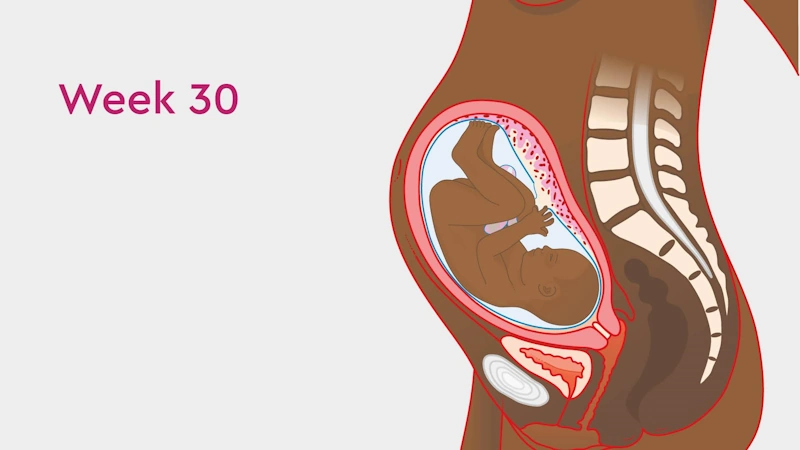
By week 30, your baby enters one of the fastest growth phases. The fetal weight reaches approximately 1.3 kilograms (2.8 pounds). If this growth rate continued at the same pace, the baby would weigh an unrealistically high amount by the end of the first year of life—fortunately, weight gain naturally regulates after birth.
At this stage, the fetus requires a significant amount of nutrients from the mother’s body, including:
-
Calcium for bone strength
-
Protein for muscle growth
-
Iron for red blood cell production
As a result, many mothers experience severe fatigue, weakness, or anemia, which are completely preventable and manageable with proper care.
Development of the Baby’s Appearance
At this stage, most babies still have blue-colored eyes, which gradually change to brown after birth when exposed to natural light. As the fine body hair (lanugo) sheds, the baby’s real scalp hair continues to thicken and grow.
Fetal Movements in Week 30 of Pregnancy
At week 30, fetal movements are stronger, more regular, and more noticeable than in earlier weeks. As the baby grows, movements shift from fast, light flutters to rolling motions, strong kicks, and full-body stretches. Normally, movements should be felt several times throughout the day, especially after meals and during rest.
⚠️ If a sudden decrease or absence of fetal movement for several hours occurs, immediate medical attention is required.
Weight Gain and Fat Layer Formation Under the Skin
By week 30, the baby’s length is almost the same as it will be at birth, but weight gain continues rapidly in the remaining weeks.
During this period:
-
A layer of fat develops under the skin
-
The skin becomes smoother and pinker
-
The baby’s appearance becomes less wrinkled
This fat layer plays a crucial role in regulating the newborn’s body temperature after birth.
Brain Development in Week 30 of Pregnancy
By this week, the baby’s brain is nearly as developed as that of a newborn. Brain activity continues at a rapid pace, with nerve cells forming complex neural connections that lay the foundation for:
-
Speech
-
Memory
-
Learning
-
Concentration
Maternal Changes in Week 30 of Pregnancy
In week 30, the mother’s body enters one of the most physically demanding phases of pregnancy. Rapid fetal growth, an expanding uterus, major hormonal changes, and increased pressure on organs lead to new symptoms or intensification of previous ones. Many mothers experience a combination of:
-
Fatigue
-
Abdominal heaviness
-
Shortness of breath
-
Pelvic pain
-
Changes in vaginal discharge
At this stage, the body is actively preparing for childbirth, even though several weeks remain.
Increased Vaginal Discharge in Week 30 of Pregnancy

One of the most common concerns during this week is increased vaginal discharge.
This increase is usually caused by:
-
Elevated estrogen levels
-
Increased blood flow to the pelvic area
-
Activation of cervical mucus
-
The body’s preparation for labor
✅ Normal discharge is typically:
-
Clear or milky white
-
Odorless or with a very mild scent
-
Free of itching and burning
⚠️ Warning signs include:
-
Continuous watery discharge (possible amniotic fluid leakage)
-
Yellow, green, or gray discharge
-
Foul odor, itching, or burning
-
Lower abdominal pain or pelvic pressure
In these cases, immediate evaluation by a gynecologist is essential.
Severe Fatigue and Anemia in Week 30
Because the baby consumes large amounts of iron and protein at this stage, the risk of pregnancy-related anemia increases. Common symptoms include:
-
Weakness and fatigue
-
Dizziness
-
Heart palpitations
-
Pale skin
Regular iron supplementation (as prescribed by a doctor) is extremely important during this period.
Pelvic Pressure, Vaginal Pain, and Abdominal Heaviness
As the uterus grows and the baby gradually moves lower:
-
Pelvic pressure increases
-
Sharp vaginal pain may occur
-
A pulling sensation in the lower abdomen and thighs may be felt
These symptoms are usually normal. However, if they are accompanied by:
-
Regular contractions
-
Spotting
-
Abnormal discharge
Immediate medical evaluation is required.
Shortness of Breath and Heartburn
During week 30:
-
The uterus presses against the diaphragm
-
The stomach is compressed
-
Acid reflux becomes more intense
As a result, mothers may experience:
-
Shortness of breath
-
Heartburn
-
A feeling of fullness even after eating small meals
Braxton Hicks Contractions
These practice contractions become more common at this stage:
-
They are irregular
-
Usually not severely painful
-
Decrease with rest
⚠️ However, if contractions:
-
Become regular
-
Increase in intensity
-
Are accompanied by watery discharge or back pain
They may indicate preterm labor.
Watery Discharge in Week 30: Normal or Dangerous?
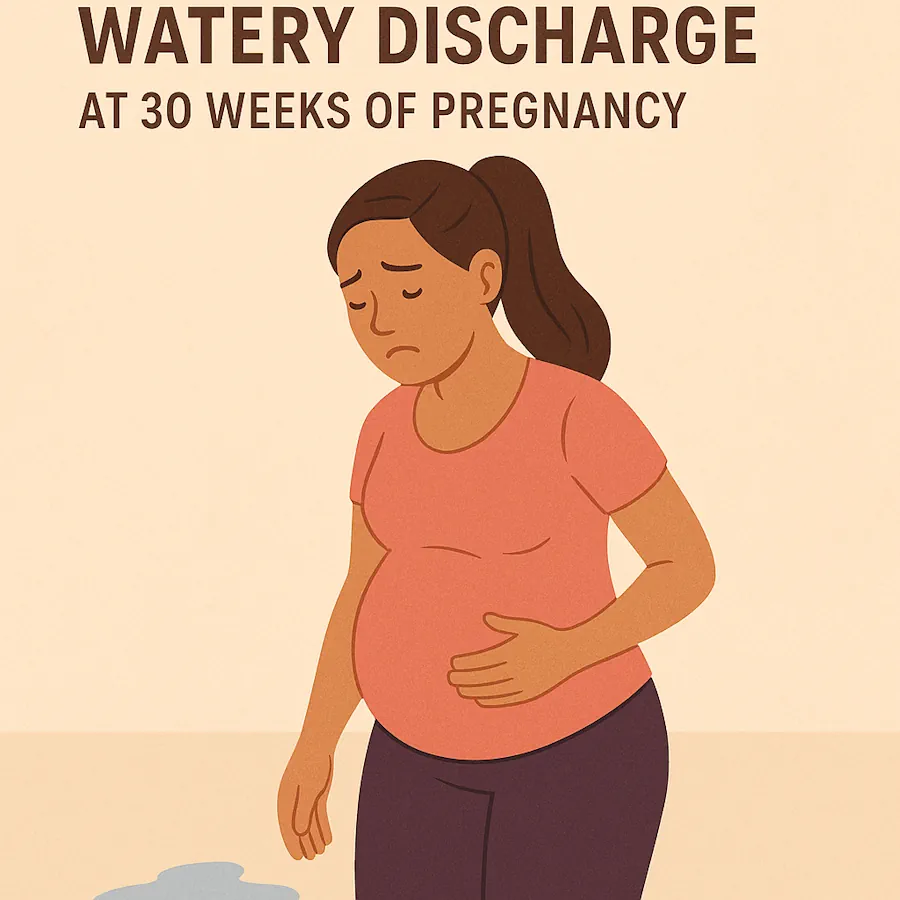
Watery discharge is one of the most common concerns in the third trimester. Many women notice frequent wetness in their underwear and worry about amniotic fluid leakage or rupture of membranes.
While some watery discharge is normal, in certain cases it may be a medical emergency.
Normal Watery Discharge Characteristics:
-
Color: Clear or milky white
-
Odor: None or very mild
-
Consistency: Thin or slightly watery
-
No itching, burning, pain, or urinary discomfort
These secretions protect against bacterial infection.
When Is Watery Discharge Dangerous?
⚠️ Warning signs include:
-
Sudden release of clear fluid
-
Continuous leakage that does not stop
-
Uncontrollable wetness
-
Accompanied by abdominal pain, pelvic pressure, back pain, or regular contractions
🔴 These may indicate premature rupture of membranes (PROM or PPROM)—an obstetric emergency.
Difference Between Normal Discharge and Amniotic Fluid Leakage
| Feature | Normal Discharge | Amniotic Fluid Leakage |
|---|---|---|
| Color | White/Clear | Completely clear |
| Odor | None | Mild, distinctive |
| Control | Controllable | Uncontrollable |
| Onset | Gradual | Sudden or continuous |
| Pain | None | May be present |
✅ If in doubt, always seek medical evaluation.
Causes of Increased Watery Discharge
-
Elevated estrogen
-
Increased pelvic blood flow
-
Cervical softening
-
Vaginal mucus stimulation
-
Increased sweating
-
Pressure from the baby on pelvic veins
Is Watery Discharge a Sign of Preterm Labor?
✅ Alone, usually no
⚠️ But if accompanied by:
-
Regular pain every 10 minutes or less
-
Persistent back pain
-
Severe pelvic pressure
-
Spotting
-
Sudden fluid release
Immediate hospital care is required.
Signs of Infectious Discharge
-
Yellow, green, or gray color
-
Fishy odor
-
Severe itching
-
Burning sensation
-
Pain during urination or intercourse
⚠️ Untreated vaginal infections increase the risk of:
-
Premature rupture of membranes
-
Preterm labor
-
Fetal infection
What Should You Do If You Notice Watery Discharge?
✅ Recommended:
-
Use sanitary pads (not tampons)
-
Monitor color and odor
-
Get adequate rest
-
Drink plenty of fluids
-
Maintain proper genital hygiene
❌ Avoid:
-
Internal vaginal washing
-
Self-medication
-
Ignoring persistent watery discharge
When Should You See a Doctor Immediately?
-
Uncontrollable clear fluid
-
Blood in discharge
-
Abdominal pain or regular contractions
-
Decreased fetal movement
-
Fever or chills
Nutrition and Exercise in Week 30 of Pregnancy

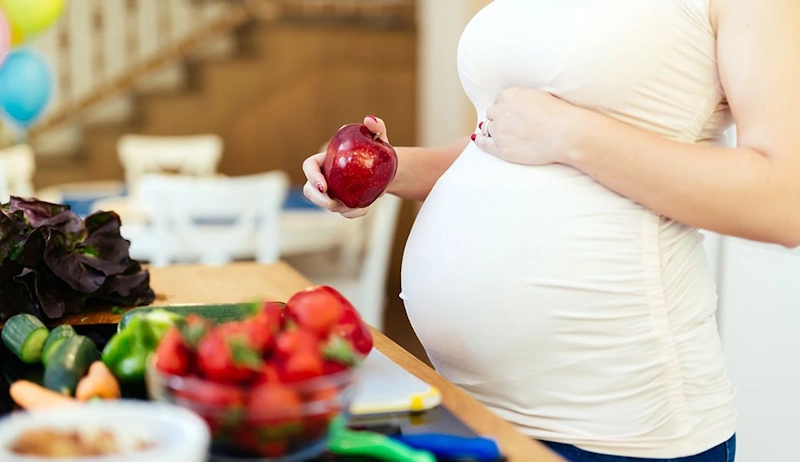
In week 30, proper nutrition and physical activity play a vital role in maternal health, fetal growth, prevention of preterm labor, anemia control, and reducing fatigue.
Essential Nutrients in Week 30
-
Iron: Red meat, liver, lentils, spinach
-
Calcium: Milk, yogurt, cheese, sesame
-
Protein: Eggs, chicken, fish, legumes
-
Folic Acid & B Vitamins: Green leafy vegetables, whole grains
-
Omega-3: Salmon, walnuts
Foods to Avoid
-
Salty processed foods
-
High caffeine intake
-
Fast food and greasy meals
-
Unpasteurized dairy
-
Undercooked meat
Sample Meal Plan
-
Breakfast: Whole grain bread + egg + milk
-
Snack: Fruit + nuts
-
Lunch: Rice + chicken or fish + vegetables
-
Afternoon snack: Yogurt + dates
-
Dinner: Soup or light low-fat meal
Exercise in Week 30: Beneficial or Risky?
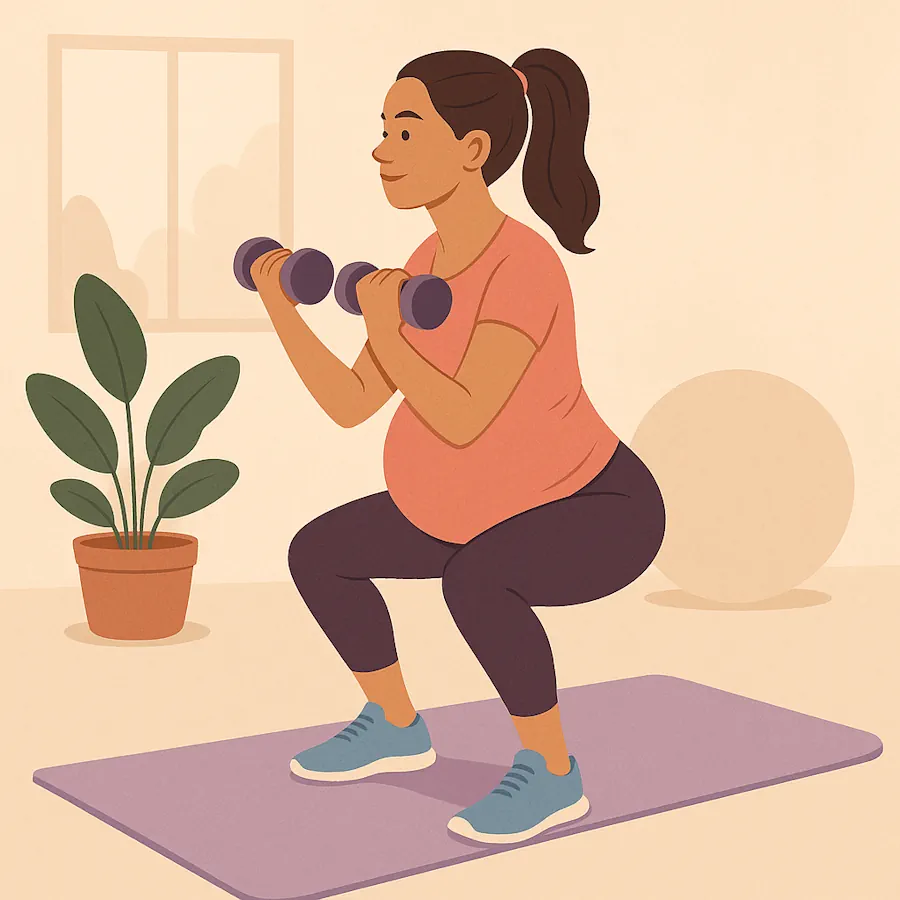
✅ Safe exercises:
-
Gentle walking
-
Prenatal yoga
-
Stretching
-
Breathing exercises
-
Swimming in lukewarm water
❌ Avoid:
-
Jumping
-
Running
-
Abdominal workouts
-
Contact sports
-
Heavy lifting
⚠️ Exercise must be avoided or supervised if there is watery discharge, bleeding, high blood pressure, short cervix, severe pain, or history of preterm labor.
Frequently Asked Questions – Week 30 of Pregnancy
-
Week 30 equals which month? → Month 7
-
Is watery discharge normal? → Yes, if odorless and mild
-
Is vaginal pain normal? → Often yes, but must be evaluated if severe
-
Can labor happen at week 30? → Yes, this is considered preterm labor
-
What about reduced fetal movement? → Requires urgent evaluation
-
Is exercise safe? → Yes, if pregnancy is low-risk
-
Is intercourse allowed? → Yes, unless high-risk pregnancy
-
Is anemia dangerous? → Yes, if not properly treated




No comment