
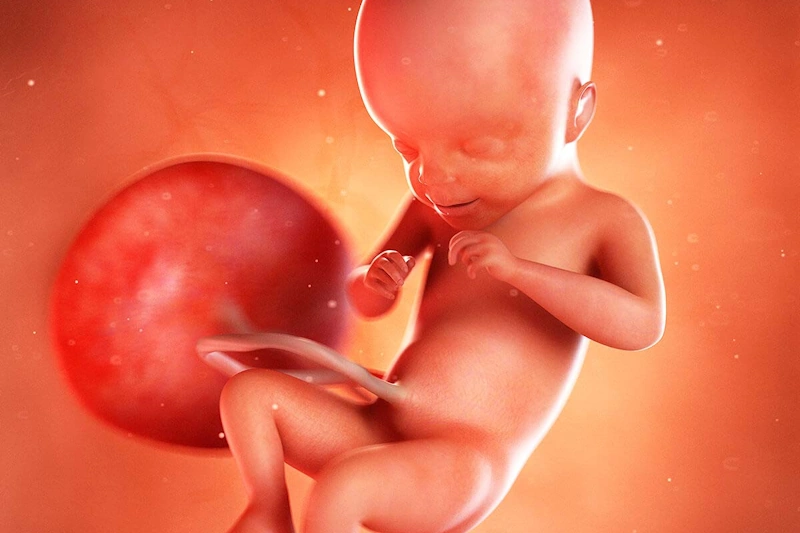
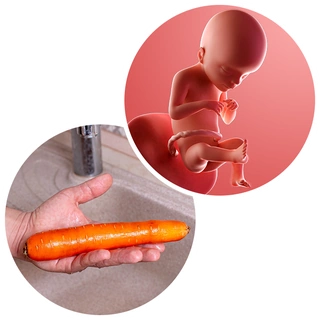
Week 21 of pregnancy marks one of the most exciting stages of your journey. Your baby is now approximately 18–25 centimeters long and weighs around 390–400 grams—about the size of a large banana. Inside the protective environment of the amniotic fluid, your baby has plenty of room to stretch, kick, and move around.
At this stage, their brain is developing rapidly, muscle coordination is improving, and you may feel stronger and more regular fetal movements—sometimes even noticeable enough for your partner to feel from the outside.
🌟 Fetal Development in Week 21
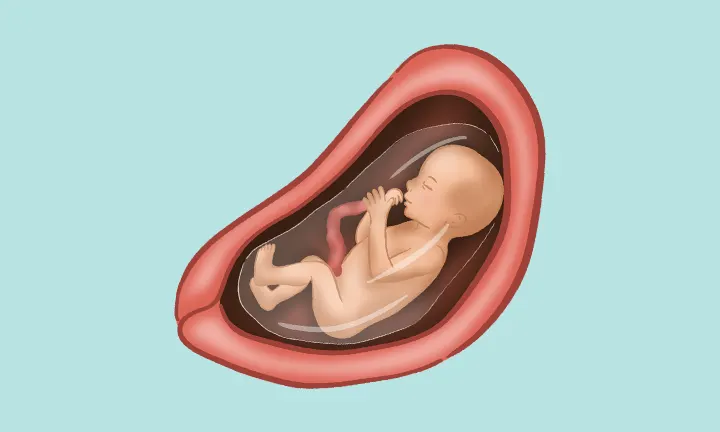
Rapid Growth and Increased Activity
By week 21, your baby has reached nearly half the weight they will be at birth. Their muscles are becoming stronger, and they alternate between short cycles of sleep and wakefulness. You may feel kicks, rolls, and jabs that happen several times an hour.
Appearance: Eyebrows and Vernix
Your baby now looks more like a newborn.
-
Eyebrows are forming
-
Skin is covered with vernix caseosa, a white protective coating
-
Most of this layer disappears before birth but remains in skin folds like the neck and behind the knees
Blood Formation and Organ Development
The liver and spleen are currently responsible for producing most of the baby’s red blood cells. Over time, the bone marrow will take over this function.
Brain Development
The fetal brain is growing at an exceptional rate, forming millions of neural connections. This development continues not only throughout pregnancy but also into early childhood.
Formation of Meconium
A dark green, sticky substance called meconium begins forming in the baby’s intestines. This will be passed as the baby’s first stool after birth.
Developing Senses
Your baby’s senses are becoming more refined:
-
They can react to light
-
Hear muffled sounds from the outside
-
Become aware of your eating and sleeping rhythms
-
Taste different flavors from the amniotic fluid
🌸 Your Body in Week 21 of Pregnancy
Mental Health and Emotional Well-Being
Mood swings, irritability, and even depression are not uncommon during pregnancy. If you have a history of mental health issues or are taking medications, it is essential to consult your doctor.
Some antidepressants like SSRIs (Prozac, Zoloft) or tricyclics may be considered safe, depending on your medical history.
Mood Stabilizers
Certain medications—such as:
-
Lithium
-
Valproic acid (Depakote)
-
Carbamazepine (Tegretol)
are associated with increased risks of miscarriage and birth defects and must be evaluated carefully.
Antipsychotic Medications
Typical and atypical antipsychotics (e.g., risperidone, olanzapine, clozapine) may be used only after evaluating risks and benefits.
✔️ Always discuss:
-
Past hospitalizations
-
Severe depression episodes
-
Suicidal thoughts
-
Impact of stopping medication
-
Possible safer alternatives
💬 Setting Boundaries with Family
As your pregnancy becomes more visible, friends and family often want to be involved—but sometimes too involved.
You and your partner should decide:
-
Who can be present in the delivery room
-
Whether you want photos or videos during labor
-
Whether you want help at home after birth
-
How long family members can stay with you
Healthy boundaries help maintain your emotional well-being and protect your relationship.
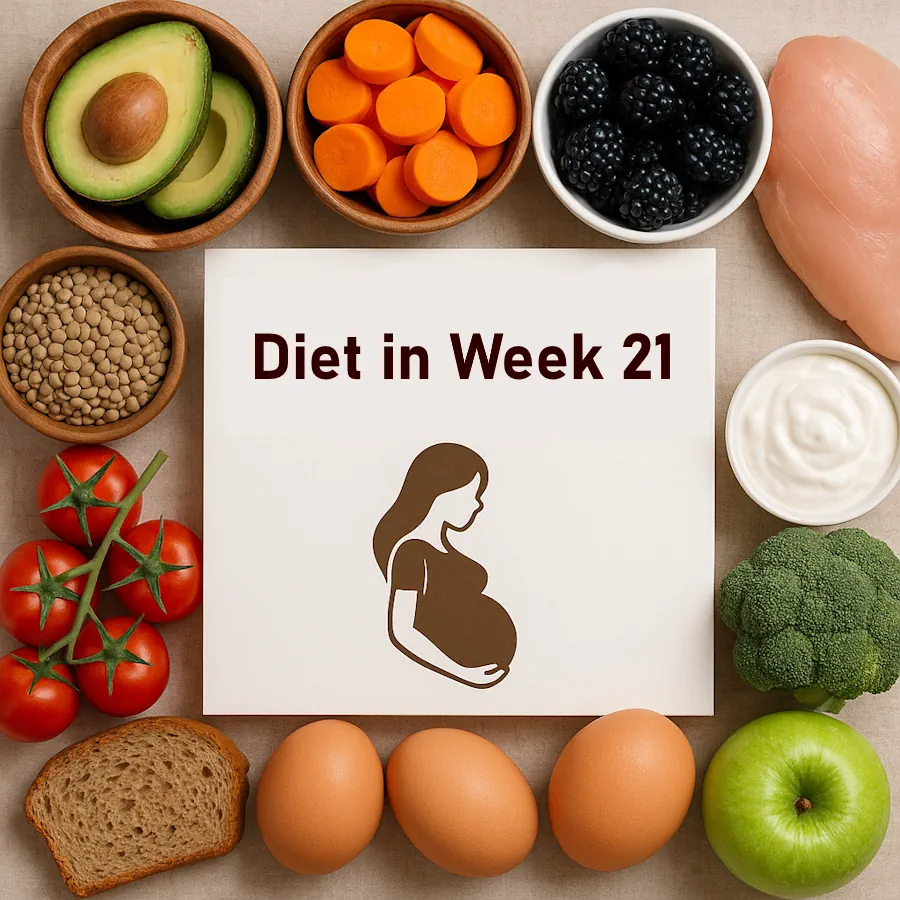
🥗 Diet and Nutrition in Week 21 of Pregnancy
Peanuts During Pregnancy
Peanuts are a nutritious choice for most pregnant women because they contain:
-
Fiber
-
Vitamin E
-
Healthy fats
-
Protein
They help regulate blood sugar, reduce cholesterol, and increase satiety.
However, peanut butter is high in calories—2 tablespoons ≈ 190 calories.
⚠️ If You Have a Peanut Allergy
Avoid peanuts entirely, as allergic reactions can include:
-
Hives
-
Swelling
-
Nausea
-
Diarrhea
-
Anaphylaxis
✔️ If You Do Not Have an Allergy
There is no strong evidence that eating peanuts increases the risk of peanut allergy in your baby.
However, if you personally have peanut allergies, your baby may be at greater risk—so it’s best to avoid peanuts during pregnancy.
🔬 Essential Nutrients
Zinc
Zinc supports cell growth, tissue repair, and immune function.
Good sources include:
-
Meat
-
Dairy
-
Eggs
-
Fortified cereals
-
Legumes
-
Nuts
Vegetarians may need more from alternative sources.
Take zinc supplements only with your doctor’s recommendation.
Vitamin B12
This vitamin prevents fatigue and anemia.
Found in:
-
Meat, fish
-
Dairy
-
Fortified cereals
Vegetarians may require supplements.
🤰 Safe Exercises and Stretching in Week 21 of Pregnancy
Exercise helps reduce back pain, improve blood flow, and prevent stiffness. Do stretches slowly, avoid pain, and breathe calmly.
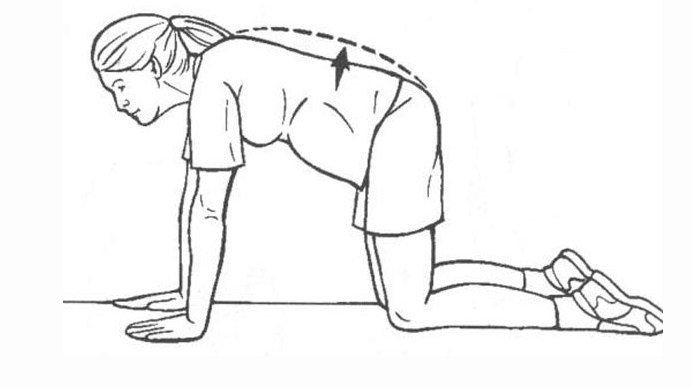
1. Cat–Cow Stretch
-
Begin on your hands and knees
-
Arch your back upward (cat pose) – hold 20 seconds
-
Lower your back and lift your head (cow pose) – hold 20 seconds
Repeat 3 times
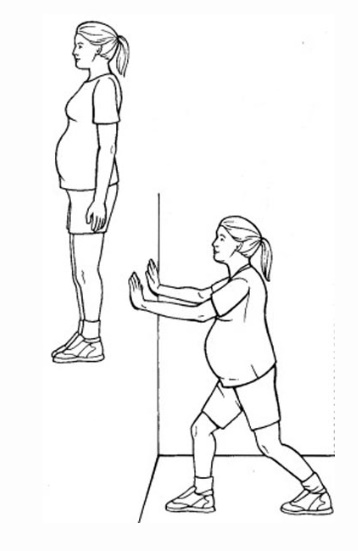
2. Calf and Thigh Stretch
-
Stand one meter from a wall
-
Keep your back leg straight and heel on the ground
-
Lean forward until you feel a stretch
Hold 20 seconds, repeat 3 times per leg
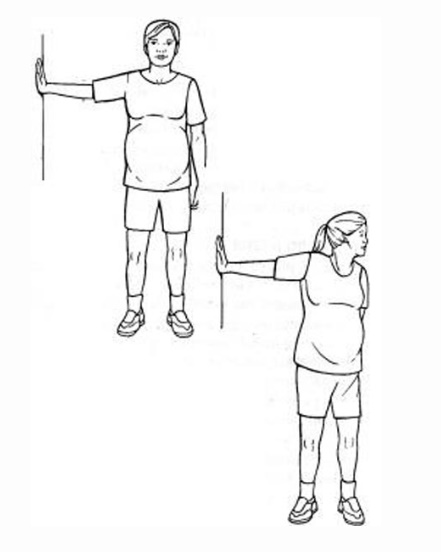
3. Chest and Arm Stretch
-
Stand 30 cm from a wall
-
Place your hand on the wall and rotate your body outward
Hold 20 seconds per arm
4. Shoulder and Upper Back Stretch
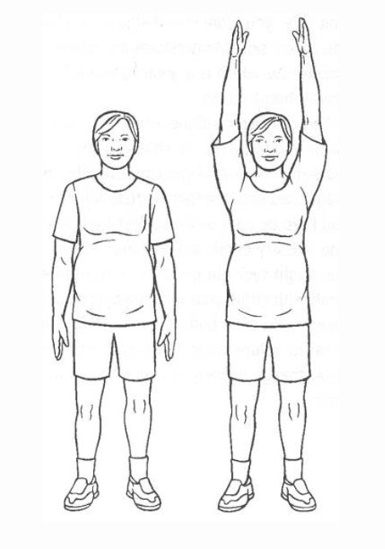
-
Raise arms overhead, palms facing each other
-
Keep elbows straight
Hold 10–20 seconds, repeat 3 times
5. Quadriceps Stretch
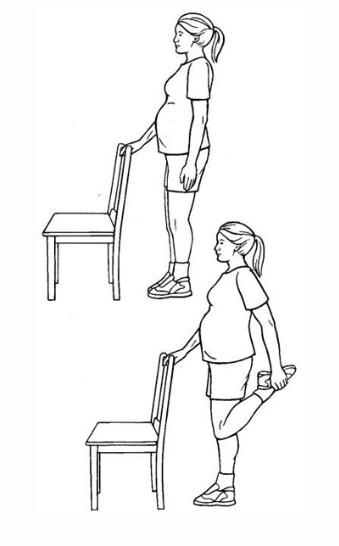
-
Hold a chair for balance
-
Bend one leg backward and pull your heel toward your hip
Hold 10–20 seconds per leg
❓ Common Questions in Week 21 of Pregnancy
Why do I feel sharp lower abdominal pain?
Your growing uterus stretches ligaments and muscles, causing temporary sharp pain.
Wear loose clothing, move slowly, and avoid sudden bending.
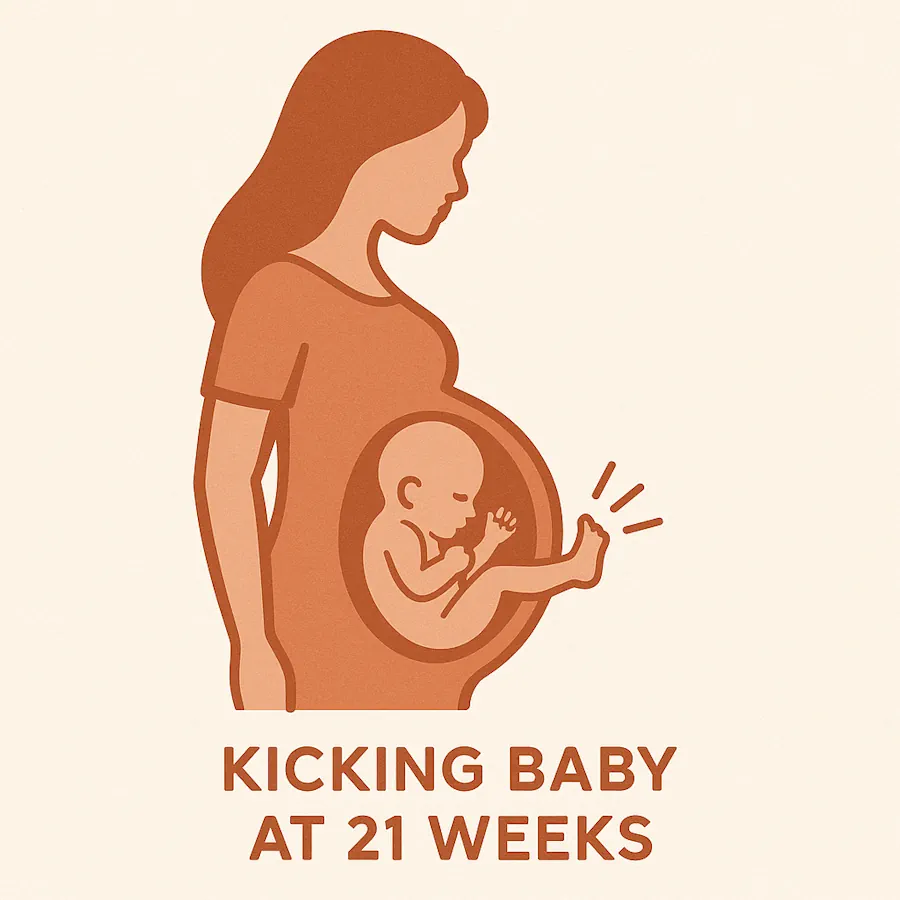
Can my baby’s kicks hurt me?
Kicks may feel strong or even painful, but they cannot harm you.
Try changing positions, massaging your belly, or playing gentle music.
I want to take a year off work after giving birth. Will it hurt my career?
Not necessarily. Stay updated by:
-
Attending online courses
-
Reading professional articles
-
Joining webinars or career groups
-
Consulting a career coach
My partner is stressed about finances. What should we do?
Discuss:
-
Essential vs. non-essential expenses
-
Savings goals
-
Monthly budgeting
-
Ways to reduce baby-related costs
Teamwork reduces stress before birth.
What month is week 21 of pregnancy?
Week 21 is in the middle of the fifth month of pregnancy.
How big is my baby at 21 weeks?
Around 18–25 cm and 390–400 g, similar to a large banana.
Where is the baby located at 21 weeks?
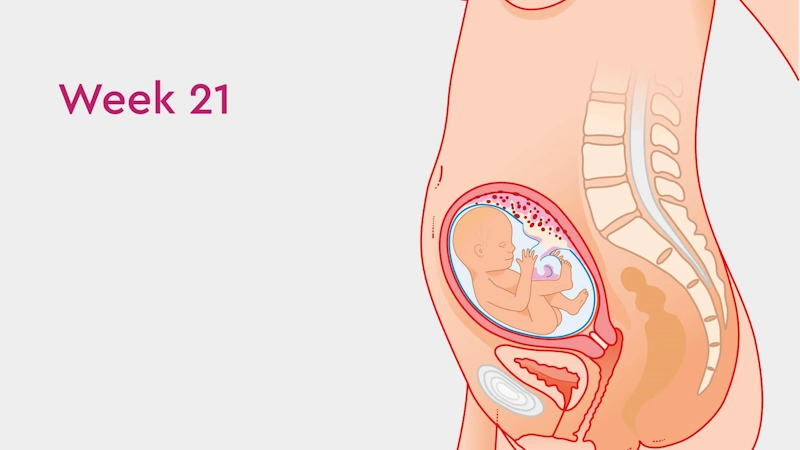
Usually between the pubic bone and the navel, but constantly moving.
What should fetal movement feel like at 21 weeks?
Stronger, more regular kicks—especially after meals or in the evening.
Is lower abdominal pain normal?
Yes, unless it is persistent, severe, or accompanied by bleeding or fever.
⚠️ Medical Warning Signs
Contact your doctor immediately if you experience:
-
Severe or persistent abdominal pain
-
Vaginal bleeding
-
Reduced fetal movement
-
Fever or chills
-
Vision changes
-
Swelling of face or hands
-
Regular contractions
-
Fluid leakage

)
No comment