
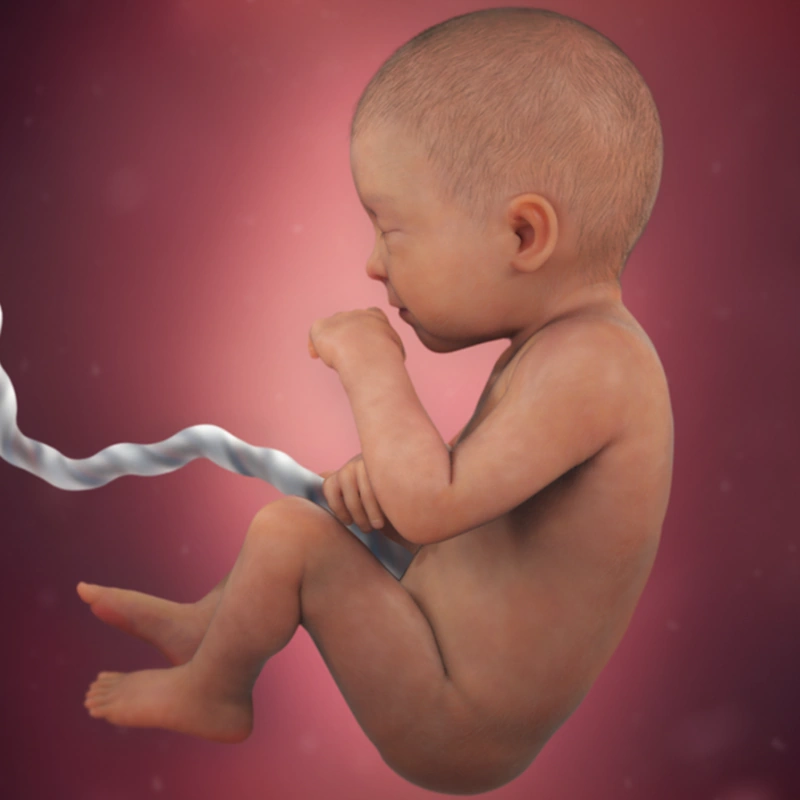
Pregnancy in the 31st week enters one of its most sensitive and important stages. In this week, your baby is on average about 41 cm long and weighs close to 1.5 kg, and is rapidly developing. The baby’s movements become stronger, more regular, and more noticeable than before, which can at the same time be both reassuring and worrying for the mother.
At the same time, your body goes through new changes such as increased abdominal pain, back pain, pelvic pressure, and sometimes vaginal pain, and knowing which of these are normal and which are dangerous is very important.
In this article, we will talk in detail about the baby’s condition at 31 weeks of pregnancy, growth and weight, common pains, warning signs, proper nutrition, and the possibility of preterm birth, so you can get through this important week with full awareness.
Baby’s Condition at 31 Weeks of Pregnancy | Weight, Length, Movements and Organ Development
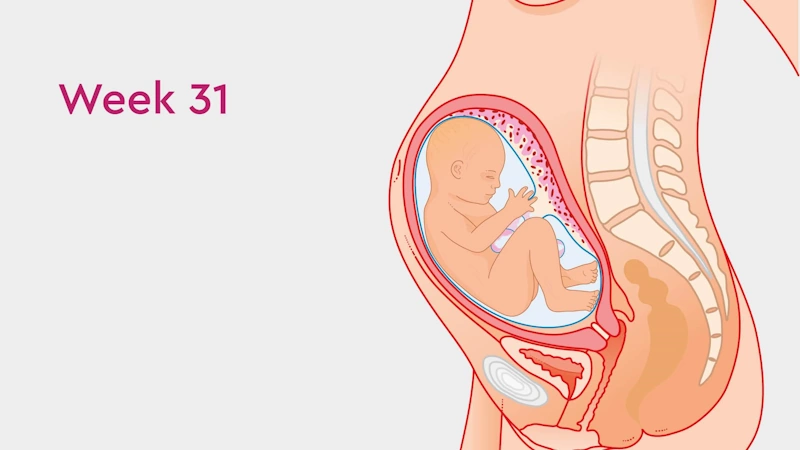
At 31 weeks of pregnancy, your baby enters an important phase of growth and development. At this time, the baby’s average weight is about 1.4 to 1.6 kg, and the length is about 40 to 42 cm. The baby’s body is gradually becoming rounder and fuller, because subcutaneous fat layers are forming, which will help regulate body temperature after birth.
✅ Increased Strength of Baby’s Movements
In this week, your baby’s movements become stronger, more regular, and more noticeable than before. Kicks, rolls, and pressure against the uterine wall may become so strong that they sometimes cause pain in the lower abdomen, sides, or pelvis. In most cases, these movements are normal and a sign of proper development of the baby’s muscular and nervous systems.
✅ Hearing Sounds and Reacting to the Environment
By 31 weeks, your baby is able to hear sounds. Your voice, heartbeat, external sounds, and even music can make the baby react. Many mothers notice that when they talk to the baby, movements increase, which is completely normal.
✅ Baby’s Hiccups at 31 Weeks
Fetal hiccups in this week are completely normal and occur due to the baby practicing breathing muscles and development of the diaphragm. These hiccups can last a few minutes and may even be felt while you are resting or sleeping.
✅ Development of Organs and Baby’s Appearance
In this week:
-
The baby’s skin is smoother and more transparent than before.
-
Some babies have thick hair on their heads, while others are still almost bald—both are normal.
-
The baby’s liver is actively producing red blood cells.
-
The nervous system and brain are developing at a high speed.
Movements: What’s Normal and What’s Not at 31 Weeks?
At 31 weeks, it is normal to feel several clear movements from your baby throughout the day. A sharp decrease in movements, a long pause in kicks, or very weak movements can be alarming and should be reported quickly to your obstetrician or midwife.
Changes in the Mother’s Body at 31 Weeks of Pregnancy | Pelvic Pain, Sleep, Stress and Birth Preparation
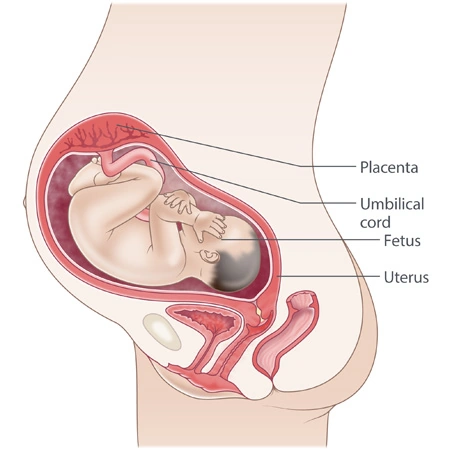
Pelvic Pain, Groin Pain and Lower Abdominal Pressure at 31 Weeks
At 31 weeks of pregnancy, many mothers experience increased pressure in the pelvic area, groin, and lower abdomen. This pressure is caused by uterine growth, a change in the body’s center of gravity, and the preparation of pelvic joints for birth.
These pains may get worse when:
-
Walking
-
Changing position
-
Laughing
-
Sneezing or coughing
In most cases, they are normal.
✅ Ways to Reduce Pelvic and Lower Abdominal Pain at 31 Weeks
-
Light and regular walking
-
Swimming or gentle water exercises
-
Frequent position changes
-
Using a maternity support belt
-
Sleeping on your left side with a pillow between your knees
Stress, Fear and Their Impact on Labor at 31 Weeks
In the final weeks of pregnancy, hearing others’ stories about vaginal birth or cesarean section can increase anxiety and fear in the mother. But you should know that:
-
No one can predict how easy or difficult a birth will be just by looking at a woman’s body.
-
Even women who look slim may have a favorable pelvis for birth, and vice versa.
Medical studies have shown that:
-
Stress increases adrenaline secretion.
-
Adrenaline can interfere with the normal progress of labor.
-
Calm mothers usually have shorter and less complicated labors.
✅ Strategies to Reduce Fear and Stress
-
Practicing deep breathing
-
Pregnancy meditation and relaxation techniques
-
Talking with your midwife or doctor
-
Avoiding frightening or negative stories and information
Sleep and Rest at 31 Weeks of Pregnancy
At 31 weeks, insomnia, frequent urination, leg cramps, and anxiety can disrupt your sleep. Adequate sleep plays a very important role in:
-
The mother’s health
-
The baby’s growth
-
Preparation for labor
✅ Tips to Improve Sleep
-
Going to bed and waking up at regular times
-
Avoiding excessive fluids before bedtime
-
Using a pregnancy pillow
-
Sleeping on the left side
Problems and Warning Signs at 31 Weeks of Pregnancy

Placenta Previa at 31 Weeks
In placenta previa, the placenta is located in the lower part of the uterus and covers the cervix. This condition can lead to:
-
Painless vaginal bleeding
-
Increased risk of preterm labor
Placenta previa is usually diagnosed by ultrasound. In many cases, to protect the health of the mother and baby, cesarean delivery is recommended.
Placental Abruption at 31 Weeks
In this condition, the placenta separates from the uterine wall before normal labor, which can cause:
-
Severe abdominal pain
-
Vaginal bleeding
-
Strong and frequent contractions
This is considered an obstetric emergency. In such cases, immediate hospitalization and close monitoring of the baby are essential.
✅ Proper Nutrition at 31 Weeks of Pregnancy | What to Eat in Week 31?

At 31 weeks, nutrition has a direct role in:
-
Brain development of the baby
-
Healthy weight gain
-
Strengthening bones
-
Preparing the mother’s body for labor
At this stage, your body needs more of certain micronutrients, and deficiencies can lead to maternal weakness, low birth weight, or preterm labor.
✅ Healthy Foods for Week 31
Your diet this week should include the following groups:
1. Proteins (for muscle and brain growth)
-
Lean red meat
-
Chicken
-
Low-mercury fish (e.g., salmon)
-
Eggs
-
Legumes
2. Dairy (for bone development)
-
Milk
-
Yogurt
-
Cheese
-
Low-salt doogh (yogurt drink)
3. Fruits and Vegetables (to prevent constipation and boost immunity)
-
Spinach
-
Broccoli
-
Oranges
-
Apples
-
Kiwi
4. Whole Grains (for steady energy)
-
Whole wheat bread
-
Brown rice
-
Oats
✅ Eating these foods helps achieve a healthy baby weight at 31 weeks.
✅ What to Eat in Week 31 to Help Baby Gain Weight?
If your baby’s weight is slightly below normal, include the following in your diet:
-
Dates (2–3 per day)
-
Nuts such as almonds and walnuts
-
Natural peanut butter
-
Milk and banana
-
Natural honey in moderation
✅ These foods help increase the baby’s weight in a healthy way without excessive maternal weight gain.
✅ Foods to Avoid at 31 Weeks
Avoid these foods in this week:
-
Undercooked foods (rare steak, runny eggs)
-
High-mercury fish such as shark or swordfish
-
Unpasteurized dairy products
-
Fatty, salty fast food
-
Sugary soft drinks
-
Excessive caffeine (more than 200 mg per day)
✅ These can lead to:
-
Reduced oxygen supply to the baby
-
More abdominal pain
-
Increased risk of preterm labor
✅ Helpful Drinks at 31 Weeks
-
Water (at least 8–10 glasses a day)
-
Milk
-
Fresh orange juice
-
Safe herbal teas such as mild chamomile or ginger (with your doctor’s approval)
✅ Dehydration at this stage can cause:
-
Muscle cramps
-
Low blood pressure
-
Increased abdominal pains
✅ How Should You Organize Your Meals?
-
3 main meals
-
2 to 3 light snacks
-
Avoid long gaps between meals
-
Avoid heavy meals at night
✅ Link Between Nutrition and Week 31 Aches and Pains
Deficiency of certain nutrients can increase:
-
Back pain
-
Muscle cramps
-
Weakness and dizziness
Adequate intake of:
-
Calcium
-
Magnesium
-
Iron
is very effective in reducing these problems.
✅Appropriate Exercise at 31 Weeks | Safe Moves, Forbidden Moves and Benefits
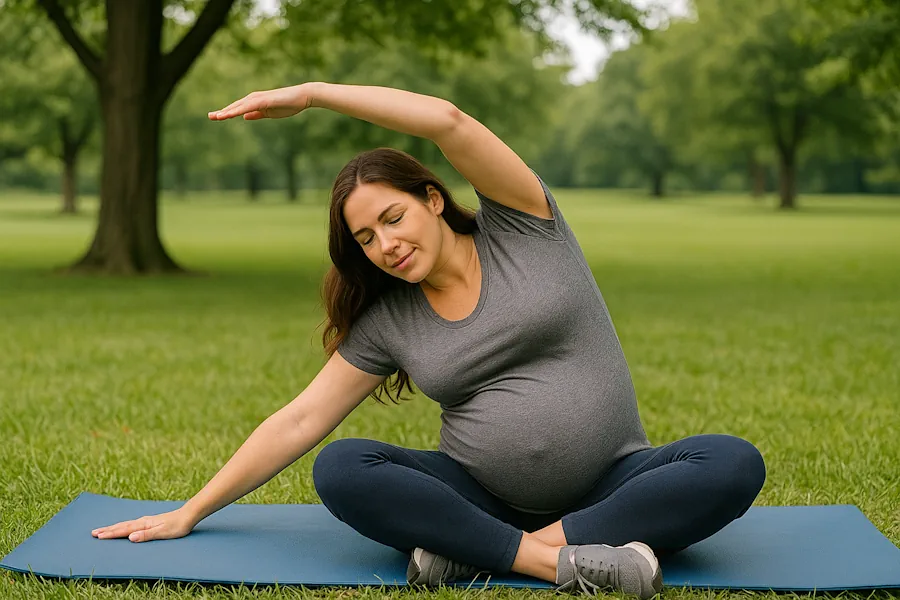
At 31 weeks of pregnancy, doing light, controlled exercise is not only allowed but also very important for:
-
Reducing pelvic and back pain
-
Reducing constipation
-
Improving sleep
-
Lowering stress
-
Better preparation for vaginal birth
Of course, the type of exercise must be fully safe and appropriate for pregnancy.
✅ Benefits of Exercise at Week 31
Regular, light exercise this week helps:
-
✅ Reduce lower abdominal and pelvic pain
-
✅ Improve placental blood flow
-
✅ Lower the risk of preterm labor
-
✅ Prevent excessive maternal weight gain
-
✅ Improve mood and reduce anxiety
✅ Best Safe Exercises at 31 Weeks
These are the safest and most effective exercises this week:
✅ 1. Gentle, Regular Walking
-
20–30 minutes a day
-
On flat, even surfaces
✅ 2. Swimming and Water Exercises
-
Great for reducing pressure on the pelvis
-
Helps reduce back and leg pain
✅ 3. Gentle Pregnancy Stretches
-
Open and relax pelvic muscles
-
Reduce leg cramps
✅ 4. Breathing Exercises for Labor
-
Improve oxygenation for the baby
-
Reduce stress
-
Prepare for labor pain
✅ 5. Pregnancy Yoga (Under Supervision)
-
Increases pelvic flexibility
-
Helps manage anxiety
-
Improves sleep
✅ A Few Simple and Safe Exercises at Home (Week 31)
✅ Exercise 1: Leg Stretch While Sitting
Stretch your legs out in front of you, pull your toes toward you, and hold for 10 seconds.
✅ Exercise 2: Gentle Pelvic Circles While Standing
Hands on hips, make small, slow circular movements with your pelvis.
✅ Exercise 3: Deep Abdominal Breathing
Inhale for 4 seconds – hold for 2 seconds – exhale for 6 seconds.
✅ Exercises to Avoid at 31 Weeks
Avoid these exercises in this week:
-
❌ Intense running
-
❌ Jumping
-
❌ Heavy weightlifting
-
❌ Sit-ups
-
❌ High-impact, jumping exercises
-
❌ Contact sports (e.g., football, basketball)
✅ These can:
-
Increase pressure on the uterus
-
Trigger contractions
-
Raise the risk of preterm labor
✅ When Is Exercise Forbidden at 31 Weeks?
Do not exercise if you have any of the following:
-
Vaginal bleeding
-
Severe abdominal or pelvic pain
-
Dizziness and strong palpitations
-
Fluid leaking from the vagina
-
Regular contractions
✅ In these situations, exercise is allowed only with your doctor’s approval.
✅ Duration and Timing of Exercise
-
✅ 20–30 minutes a day
-
✅ Best times: morning or late afternoon
-
✅ Do not exercise on a very full or very empty stomach
-
✅ Drink enough water before and after exercise
✅ Effect of Exercise on Labor Later
Proper exercise at 31 weeks:
-
✅ Increases the chances of vaginal birth
-
✅ Shortens labor duration
-
✅ Reduces the likelihood of needing a cesarean
-
✅ Makes labor pain more manageable
✅ Summary of This Section
-
✅ Light exercise at 31 weeks is safe in a normal pregnancy
-
✅ Walking, swimming, yoga, and breathing exercises are ideal
-
✅ Avoid intense and high-impact workouts
-
✅ Stop exercising and seek advice if any abnormal symptoms appear
✅ Vaginal Pain at 31 Weeks | Causes, Warning Signs and Ways to Relieve It
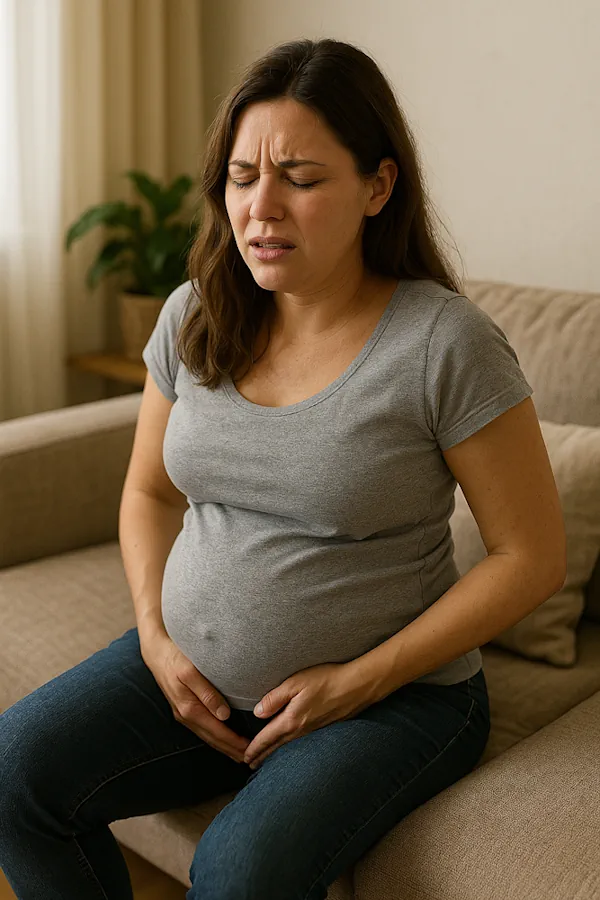
Vaginal pain at 31 weeks is one of the most common complaints in this stage of pregnancy. This pain may feel like:
-
Sharp, shooting pain
-
Pressure
-
Burning
-
Or period-like cramps
and often worries mothers. Fortunately, in many cases this pain is normal, but in some situations it can be a warning sign.
✅ What Causes Vaginal Pain at Week 31?
The most common normal and common causes of vaginal pain at 31 weeks are:
✅ 1. Baby’s Head Pressing on the Pelvis and Cervix
As your baby grows, direct pressure is applied to the pelvic floor and cervix, which can cause pain, shooting sensations, or a heavy feeling in the vagina.
✅ 2. Loosening of Pelvic Joints and Ligaments
Due to the hormone relaxin, pelvic joints become softer and looser to prepare for birth. This can cause vaginal and groin pain.
✅ 3. Increased Blood Flow to the Genital Area
In pregnancy, blood flow to the vagina increases, which may cause:
-
A feeling of pressure
-
Burning
-
Mild pain
✅ 4. Constipation and Bowel Pressure on the Pelvis
Constipation is one of the indirect but common causes of vaginal and lower abdominal pain at 31 weeks.
✅ When Is Vaginal Pain at 31 Weeks Dangerous?
Vaginal pain is dangerous and needs immediate medical attention if any of the following occur:
-
Vaginal bleeding
-
Severe, constant pain that doesn’t improve with rest
-
Abnormal discharge with a bad smell
-
Pain along with fever
-
Regular uterine contractions
-
A strong downward pressure like the urge to push
✅ These symptoms can indicate:
-
Preterm labor
-
Vaginal infections
-
Placental abruption
✅ Difference Between Normal and Dangerous Vaginal Pain at 31 Weeks
| Normal pain | Dangerous pain |
|---|---|
| Mild and short-lived | Severe and continuous |
| Improves with changing position | Does not improve with rest |
| No bleeding | Accompanied by bleeding |
| No fever | With fever |
| Irregular | With regular contractions |
✅ Ways to Reduce Vaginal Pain at 31 Weeks
You can use the following methods to reduce this pain:
-
✅ Resting on your left side
-
✅ Using a pillow between your knees
-
✅ Wearing cotton, loose underwear
-
✅ Avoiding long periods of standing or sitting
-
✅ Using a maternity support belt
-
✅ Treating constipation with:
-
Plenty of water
-
Fruits
-
Vegetables
-
Fiber
-
-
✅ Light daily walking
✅ Is Vaginal Pain at 31 Weeks a Sign of Preterm Labor?
✅ In most cases, no.
But if vaginal pain occurs together with:
-
Regular contractions every 10 minutes or less
-
Watery discharge (possible rupture of membranes)
-
Severe, constant back pain
-
Intense pressure in the pelvis
then it could be a sign of preterm labor, and you should go to the emergency department immediately.
✅ Can Intercourse Cause Vaginal Pain at Week 31?
✅ Yes, in some women:
-
Due to increased cervical sensitivity
-
Increased blood flow to the vagina
-
Mechanical pressure during intercourse
vaginal pain or mild spotting may occur afterwards. If it is:
-
Mild
-
Not associated with heavy bleeding
it is usually not worrisome.
✅ Medical Summary of This Section
-
✅ In most cases, vaginal pain at 31 weeks is normal
-
✅ But if it is accompanied by:
-
Bleeding
-
Fever
-
Regular contractions
it can be dangerous
-
-
✅ In most cases, it can be controlled by lifestyle and nutrition changes
✅ Birth at 31 Weeks | Will a 31-Week Baby Survive?

Birth at 31 weeks of pregnancy is considered preterm, but the good news is that with modern medicine, the survival rate of 31-week babies is very high. Many babies born at this stage, if they receive appropriate NICU care, grow up without serious long-term problems.
✅ What Is the Survival Rate at 31 Weeks?
According to medical statistics:
-
✅ The survival rate at 31 weeks is over 95%
-
✅ The lungs are largely developed
-
✅ The nervous system is in an advanced stage of development
-
✅ Most babies at this age of gestation only need temporary breathing support
✅ So the answer to the common question:
“Will a 31-week baby survive?” → Yes, with a very high probability.
✅ Baby’s Weight and Condition if Born at 31 Weeks
-
Approximate weight: 1.3–1.6 kg
-
Length: about 40–42 cm
-
Skin: thin and delicate
-
Lungs: not fully mature yet
-
Sucking ability: weaker than full-term babies
✅ These babies usually need:
-
A period in an incubator (NICU)
-
Feeding through IV or tube
-
Continuous monitoring of breathing and heart rate
✅ Possible Complications of Birth at 31 Weeks
Preterm birth may put the baby at risk of:
-
Respiratory problems
-
Difficulty maintaining body temperature
-
Severe jaundice
-
Infection
-
Delayed oral feeding
✅ With proper care, most of these complications are temporary and treatable.
✅ Warning Signs of Preterm Labor at 31 Weeks
Go to the emergency department immediately if you notice:
-
Regular contractions (every 10 minutes or less)
-
Constant abdominal or back pain
-
Sudden watery discharge (possible rupture of membranes)
-
Spotting or bleeding
-
Strong downward pressure in the pelvis
✅ These may be signs of preterm labor at 31 weeks.
✅ Can Preterm Labor at 31 Weeks Be Stopped?
✅ In many cases, if the mother goes to the hospital quickly:
-
With medications that reduce contractions
-
Corticosteroid injections to help lung maturity
-
Bed rest and hospitalization
labor can be delayed by several days to a few weeks, which has a major positive impact on the baby’s health.
✅ Vaginal Birth or C-Section at 31 Weeks?
The method of delivery depends on:
-
Baby’s condition
-
Placental location and status
-
Cervical dilation
-
Mother’s health
✅ In many cases:
-
If the baby’s position is good → Vaginal birth may be possible
-
In high-risk situations → C-section is chosen
✅ Medical Summary of This Section
-
✅ Birth at 31 weeks is preterm
-
✅ The survival rate is very high (over 95%)
-
✅ With timely treatment, labor can sometimes be delayed
-
✅ NICU care is crucial
-
✅ Most children can have a normal future
✅ Frequently Asked Questions (FAQ) About 31 Weeks of Pregnancy
✅ Is loss of appetite at 31 weeks normal?
Yes. In some mothers, uterine pressure on the stomach, reflux, anxiety, or fatigue can reduce appetite. The important thing is that even with low appetite, you should eat small but nutritious meals so the baby’s growth is not affected.
✅ Are vaginal discharges at 31 weeks normal?
Yes. Increased clear or white, odorless discharge without itching is normal at this stage.
But if the discharge is:
-
Yellow, green, or foul-smelling
-
Associated with burning or itching
it may indicate a vaginal infection and needs treatment.
✅ Are period-like cramps at 31 weeks dangerous?
Mild period-like cramps are usually normal and caused by stretching of uterine ligaments or pressure from the baby.
But if the cramps:
-
Become severe and constant
-
Are accompanied by regular contractions
-
Or are associated with bleeding
they may be a sign of preterm labor.
✅ Do I need strict bed rest at 31 weeks?
No. In normal pregnancy, strict bed rest is not recommended, and light activity like walking is beneficial.
Bed rest is prescribed only in special conditions such as:
-
Vaginal bleeding
-
Placenta previa
-
Threatened preterm labor
and only under your doctor’s supervision.
✅ Does the baby feel pain at 31 weeks?
The baby’s nervous system is largely developed at this stage, and the baby can perceive some stimuli, but does not experience pain consciously in the same way as an adult.
✅ Is sex at 31 weeks safe?
If you do not have:
-
Bleeding
-
Placenta previa
-
Severe pain
-
Threatened preterm labor
then sex at 31 weeks is usually safe.
However, if after intercourse you have:
-
Severe pain
-
Spotting
-
Contractions
you should be examined by your doctor.
✅ Is swelling of the feet at 31 weeks normal?
Yes. Mild swelling of the feet and ankles at this stage is normal due to:
-
Increased blood volume
-
Uterine pressure on pelvic veins
But if swelling is:
-
Severe and sudden
-
Associated with headache, blurred vision, or high blood pressure
it can be a sign of preeclampsia and needs urgent evaluation.
✅ Is frequent urination at 31 weeks normal?
Yes. Due to direct pressure of the uterus on the bladder, frequent urination is normal.
But if it is accompanied by:
-
Burning
-
Pain
-
Fever
it may indicate a urinary tract infection.
✅ Is reduced baby movement after 31 weeks normal?
No. If you notice a clear and significant decrease in movements, it is not normal and must be checked immediately. Reduced movement may indicate decreased oxygen supply to the baby.
✅ Is traveling at 31 weeks allowed?
If your pregnancy is low-risk, short trips with:
-
Regular breaks
-
Adequate fluid intake
-
Avoiding long periods of sitting
are usually allowed.
In high-risk pregnancies, travel should only be done with your doctor’s approval.




No comment