
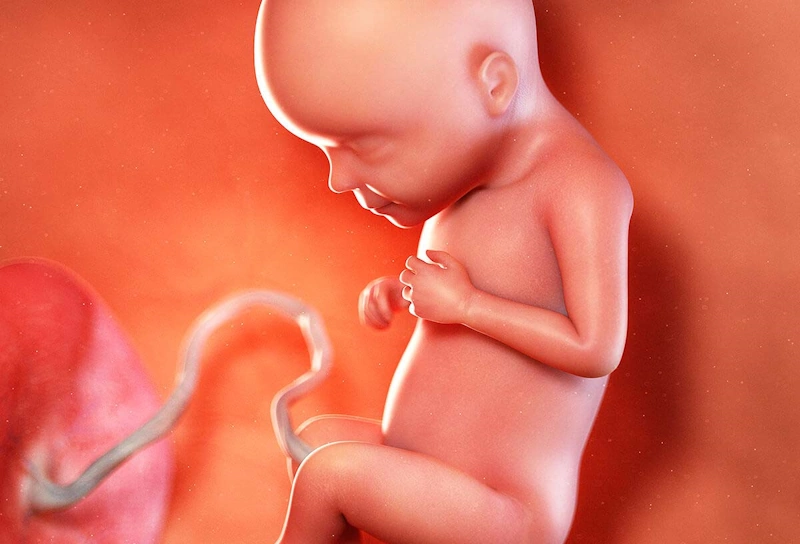
You are now 29 weeks pregnant, which means you are in the middle of the seventh month and well into the third trimester. At this stage, your baby is growing faster than ever, gaining fat, strengthening muscles, and preparing for life outside the womb. Meanwhile, your body is adapting to support this rapid growth — which can bring new physical and emotional changes.
This comprehensive guide explains everything you need to know about week 29 of pregnancy, including fetal development, maternal symptoms, important care tips, signs of preterm labor, and answers to the most common questions.
⭐ Week 29 Pregnancy: How Many Months Is That?
Pregnancy weeks do not perfectly match calendar months, but the standard medical breakdown places:
-
Weeks 28–31 → Month 7
This means:
-
Week 29 = mid-seventh month of pregnancy
-
Only about 10–11 weeks remain until your due date
Knowing your pregnancy month helps you better understand the developmental milestones and common symptoms expected during this stage.
⭐ Fetal Growth and Development at 29 Weeks
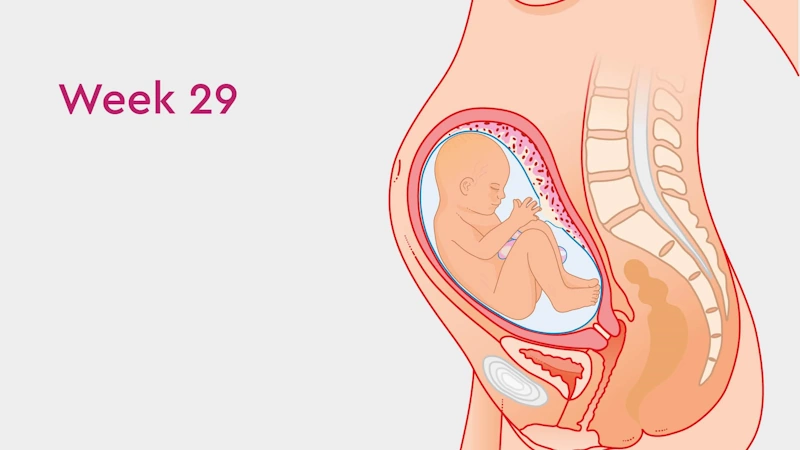
By week 29, your baby looks more like a newborn, though still much smaller and thinner. Several major developmental changes occur this week:
🔹 Baby’s Size and Weight
-
Length: ~37 centimeters (14.5 inches)
-
Weight: 1.1–1.3 kilograms (2.4–2.8 pounds)
Your baby is gaining fat, which helps regulate temperature after birth and smooths the once-wrinkled skin.
🔹 Bones, Muscles & Nervous System
-
Bones continue to harden
-
Muscles strengthen due to frequent movement
-
The brain grows rapidly and forms complex neural connections
-
Sleep cycles begin to develop, with more noticeable patterns of activity and rest
🔹 Position & Movements
Space in the uterus becomes more limited, so the baby often:
-
Bends knees toward the chest
-
Rolls, stretches, and turns more deliberately
-
Produces stronger, more rhythmic kicks and jabs
Many parents can even identify hands, feet, or elbows pushing against the abdominal wall.
🔹 Differences Between Boys and Girls
-
Female fetuses typically weigh slightly less than males at birth
-
Babies in second or third pregnancies often grow larger than firstborns
Both variations are normal unless your obstetrician indicates otherwise.
⭐ Changes in the Mother’s Body at 29 Weeks

Your body is working hard to support your developing baby, and several symptoms typically appear or intensify during this week.
🔹 Fatigue Returns
Many women feel a resurgence of first-trimester tiredness due to:
-
Increased weight and energy demands
-
Frequent nighttime awakenings
-
More bathroom visits
-
Active fetal movements during the night
Short naps and scheduled rest periods can significantly reduce fatigue.
🔹 Shortness of Breath
As the uterus pushes upward toward the rib cage:
-
The diaphragm has less room to expand
-
You may breathe more quickly or feel winded with mild activity
This usually improves once the baby “drops” closer to the due date.
🔹 Frequent Urination
Pressure on the bladder increases, causing:
-
More bathroom trips
-
Interrupted sleep
-
A general feeling of pelvic heaviness
Contact your doctor if urination becomes painful or develops an unusual odor (possible UTI).
🔹 Back Pain & Pelvic Discomfort
These symptoms occur as:
-
The center of gravity shifts
-
Ligaments loosen due to pregnancy hormones
-
Muscles work harder to support your abdomen
Sleeping with pillows under the belly and between the knees helps ease discomfort.
🔹 Swelling and Tingling in Hands & Feet
Fluid retention may cause:
-
Puffy fingers and ankles
-
Tingling or numbness (similar to carpal tunnel syndrome)
-
Temporary stiffness
This typically resolves after delivery.
⚠️ Sudden or severe swelling should be evaluated for preeclampsia.
🔹 Difficulty Sleeping
Causes include:
-
Baby’s nighttime activity
-
Heartburn
-
Physical discomfort
-
Anxiety or racing thoughts
Side-sleeping with supportive pillows is the safest and most comfortable position.
⭐ Important Care Tips for Week 29 of Pregnancy
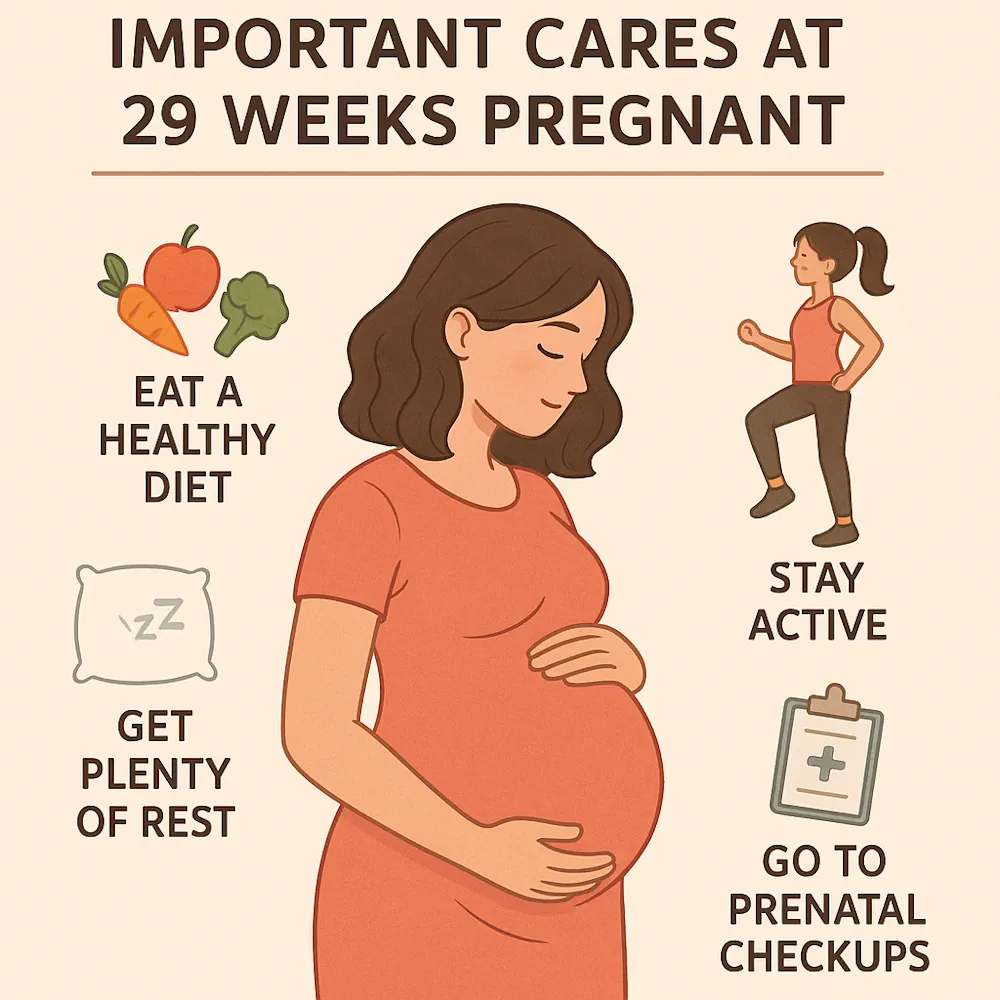
🔹 1. Prioritize Rest
-
Take a 20–30 minute nap when possible
-
Rest your feet to reduce swelling
-
Avoid long stretches of standing
Adequate rest lowers the risk of preterm labor.
🔹 2. Choose the Safest Sleeping Position
Sleep on your left side, with:
-
A pillow between your knees
-
One small pillow under the belly
-
A supportive pillow behind your back
Avoid sleeping flat on your back, as it may reduce blood flow.
🔹 3. Eat Nutrient-Rich Foods
Focus on:
-
Iron-rich foods (lean meats, lentils, spinach)
-
Protein (eggs, chicken, legumes)
-
Calcium (dairy, almonds, sesame)
-
Fiber (whole grains, fruits)
Stay hydrated with 8–10 glasses of water per day.
🔹 4. Gentle Exercise
Recommended activities:
-
Walking
-
Prenatal yoga
-
Swimming
-
Stretching exercises for chest, shoulders, and back
Stop immediately if you experience dizziness, bleeding, or regular contractions.
🔹 5. Monitor Mental Well-Being
Many women experience:
-
Anxiety
-
Sensitivity
-
Worry about childbirth
-
Difficulty concentrating
Relaxation techniques, prenatal classes, and talking with your provider help reduce stress.
🔹 6. Watch for Warning Signs
Seek medical attention for:
-
Leaking fluid
-
Vaginal bleeding
-
Severe headaches
-
Sudden swelling
-
Decreased fetal movements
-
Painful or regular contractions
These could indicate preterm labor or preeclampsia.
⭐ Preterm Labor at Week 29: Should You Be Concerned?
Giving birth at 29 weeks is considered preterm, but modern neonatal care greatly improves outcomes.
🔹 Survival Rates
-
90–95% of babies born at 29 weeks survive with proper NICU care
-
Birthweight is typically 1–1.3 kg
-
Temporary breathing support is common
-
Feeding often begins through a feeding tube
🔹 Why Preterm Birth Happens
Common causes include:
-
Infection
-
Premature rupture of membranes (PROM)
-
High blood pressure or preeclampsia
-
Placental complications
-
Multiple pregnancy
-
Unknown factors
🔹 Signs of Preterm Labor
Call your doctor or go to the hospital if you notice:
-
Contractions every 10 minutes or less
-
Pelvic pressure
-
Persistent backache
-
Bleeding or spotting
-
Leaking fluid
-
Reduced fetal movement
🔹 If Preterm Labor Begins
Your doctor may:
-
Perform an ultrasound or NST
-
Give corticosteroids to speed lung development
-
Administer magnesium sulfate for neurological protection
-
Use tocolytics to delay labor
-
Transfer you to a hospital with a NICU if needed
Even delaying labor for 24–48 hours significantly improves neonatal outcomes.
⭐ Emotional Well-Being and Common Fears at Week 29
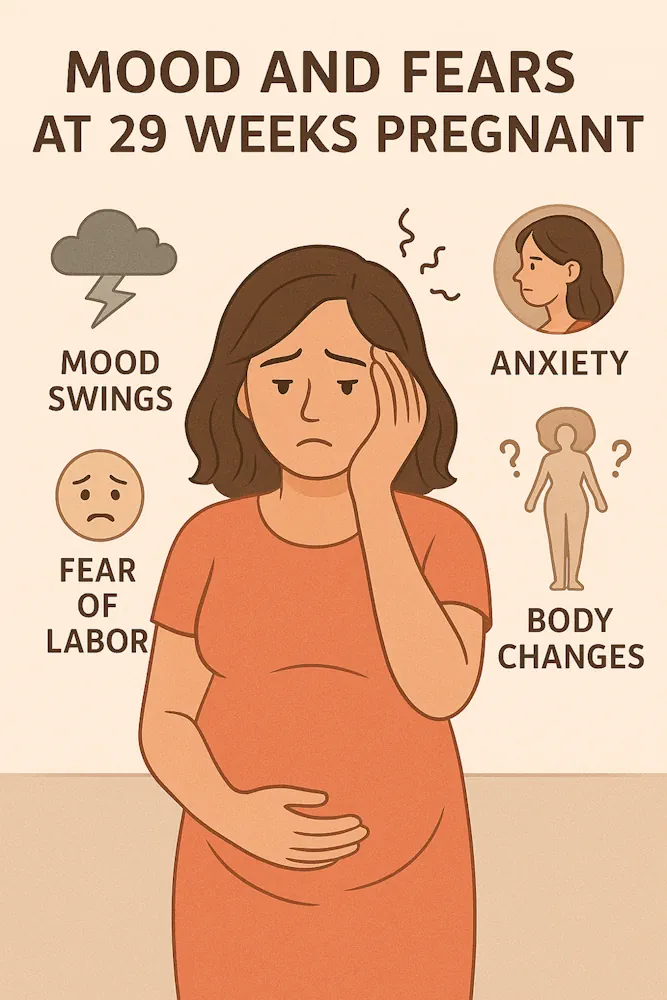
It is normal to feel:
-
Excitement
-
Worry
-
Mood swings
-
Fear of the unknown
Hormonal changes combined with physical discomfort can intensify emotions.
🔹 Common Fears Include:
-
Pain during labor
-
Emergency C-section
-
Baby’s health
-
Loss of control
-
Not being “ready” for motherhood
These feelings are not unusual and often improve with education and support.
🔹 How to Manage Anxiety
-
Practice deep breathing or meditation
-
Attend prenatal childbirth classes
-
Limit exposure to negative birth stories
-
Talk with your obstetrician
-
Seek mental health support if anxiety becomes overwhelming
Seeking help early improves both maternal and infant outcomes.
⭐ Frequently Asked Questions About Week 29 of Pregnancy
❓ How many months is 29 weeks pregnant?
You are in the seventh month of pregnancy.
❓ How strong should fetal movements be?
Movements should be regular and noticeable. Reduced movement requires prompt evaluation.
❓ Is travel safe at 29 weeks?
Short trips are usually safe in low-risk pregnancies. Always ask your provider before flying.
❓ Is back pain normal?
Yes, due to weight gain and changes in posture. Seek help if pain is severe or sudden.
❓ When should I call my doctor?
If you experience:
-
Bleeding
-
Fluid leakage
-
Severe swelling
-
Reduced fetal movement
-
Painful contractions
⭐ Final Recommendations From Obstetric Specialists
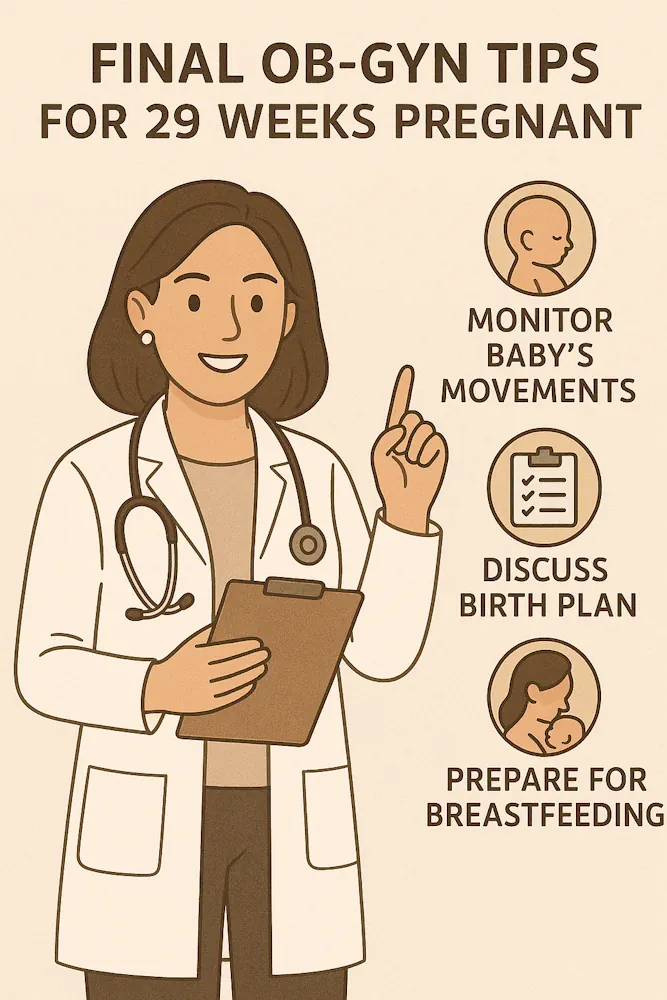
-
Pay close attention to fetal movements
-
Stay hydrated and well-nourished
-
Prioritize rest and avoid heavy lifting
-
Choose comfortable sleep positions
-
Stay aware of preterm labor symptoms
-
Protect your emotional health
-
Plan ahead for delivery, hospital bags, and support systems
With proper care, most women enjoy a healthy remainder of pregnancy and a safe delivery.





No comment