

A six-week-old baby is at one of the most important stages of early development. At this time, many parents have questions about growth, weight gain, vomiting after feeding, sleep patterns, and the baby’s overall health. At six weeks of age, many physical and behavioral changes are completely normal, but understanding the difference between normal developmental signs and warning symptoms is essential.
At the same time, the sixth week postpartum is also a key milestone for mothers. During this period, the body gradually returns to its pre-pregnancy state, and a postpartum medical check-up is usually performed. A mother’s physical and emotional well-being during this time plays a direct role in the comfort, care, and healthy development of a six-week-old baby.
In this article, we take a comprehensive look at the condition of a six-week-old baby, including growth, feeding, sleep, and vomiting, and then review important points related to the mother’s condition in the sixth week after childbirth, addressing the most common concerns during this period.
What Is the Condition of a Six-Week-Old Baby Like?

Compared to the first weeks after birth, a six-week-old baby experiences noticeable changes. At this age, babies gradually become more alert, respond more to sounds and light, and begin to show slightly more predictable patterns of sleep and feeding. Many concerns parents have during this period are normal and part of healthy infant development.
At six weeks of age, most babies:
- Stay awake for longer periods
- Respond to their parents’ voices
- Make brief eye contact
- Show more purposeful movements of the arms and legs
From a physical standpoint, the digestive system of a six-week-old baby is still developing. As a result, issues such as spitting up after feeding, frequent burping, or brief episodes of fussiness are common and usually not a cause for concern, as long as the baby is gaining weight appropriately and shows no abnormal symptoms.
In the following sections, we will examine growth, weight gain, vomiting, and normal versus warning signs in six-week-old babies in more detail to help parents better assess their baby’s condition.
Normal Growth of a Six-Week-Old Baby (Weight Gain and Normal Signs)

Growth in a six-week-old baby is generally more consistent than in the very early newborn period, and one of the most important indicators of health is adequate weight gain. At this age, a baby who gains an average of 20 to 30 grams per day is typically considered to be growing normally.
Many parents worry that their baby is not getting enough milk due to spitting up or fussiness. However, in most cases, a six-week-old baby only brings up a small amount of the milk consumed, while the majority remains in the stomach and contributes to normal growth.
Normal Weight of a Six-Week-Old Baby
A baby’s weight at six weeks depends on factors such as birth weight, whether the baby is breastfed or formula-fed, and genetics. In general:
- The baby should have regained their birth weight
- Weight gain should be gradual and consistent
- The baby should have regular wet diapers (at least six per day)
If these signs are present, growth is usually considered normal even if mild spitting up occurs.
Normal Signs in a Six-Week-Old Baby
At this age, the following behaviors and signs are completely normal and usually not concerning:
- Spitting up small amounts of milk
- Brief periods of fussiness, especially in the evening
- Frequent burping
- Irregular arm and leg movements
- Short and irregular sleep periods
These signs reflect the ongoing development of the nervous and digestive systems in a six-week-old baby.
What Is Sleep Like for a Six-Week-Old Baby?
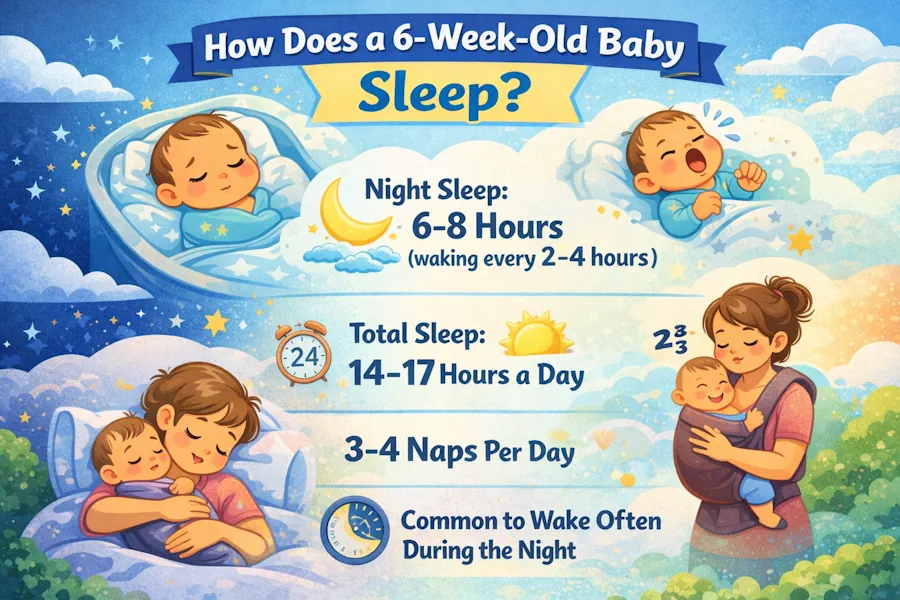
Sleep in a six-week-old baby is not yet regular, and parents should not expect a fixed sleep schedule. At this age, babies typically sleep 14 to 17 hours in a 24-hour period, but this sleep occurs in short, fragmented intervals throughout the day and night.
Many parents worry about frequent nighttime awakenings, but this behavior is completely normal in a six-week-old baby and is mainly due to the need for feeding and ongoing neurological development.
Normal Sleep Patterns at Six Weeks
At this age:
- Sleep periods usually last 2 to 4 hours
- The distinction between day and night is not fully established
- Babies may fall asleep quickly after feeding
- Nighttime awakenings are normal and necessary
Why Is Sleep Fragmented at Six Weeks?
Interrupted sleep at this age may occur due to:
- Hunger
- Gas or the need to burp
- Mild spitting up
- Normal neurological sensitivity
These factors gradually improve as the baby grows.
How Can You Help a Six-Week-Old Baby Sleep Better?
Without enforcing strict schedules, parents can support better sleep by:
- Creating a calm, low-light environment at night
- Changing diapers before sleep
- Holding the baby upright after nighttime feedings
- Putting the baby down when drowsy, not fully asleep
When Is Sleep a Cause for Concern?
Consult a healthcare provider if the baby:
- Sleeps very little or appears constantly unsettled
- Has poor sleep along with inadequate weight gain
- Appears unusually lethargic or excessively sleepy
Important Note for Parents:
At six weeks of age, the goal is not sleep training. The priority is providing security, comfort, and responsive care. More structured sleep patterns usually develop after the third month.
Feeding a Six-Week-Old Baby (Breast Milk or Formula)
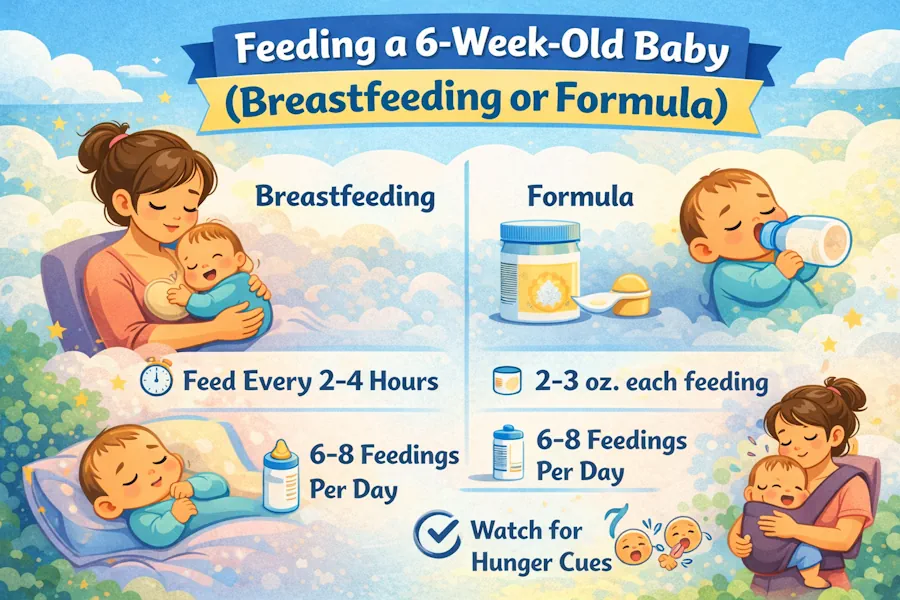
Feeding plays a central role in a six-week-old baby’s growth, sleep, and comfort. At this age, the baby’s only source of nutrition should be breast milk or formula, and no complementary foods should be introduced.
How Often Should a Six-Week-Old Baby Be Fed?
Most six-week-old babies feed every 2 to 3 hours. Some babies may want to feed more frequently, which is normal, especially during growth spurts.
Signs of hunger include:
- Sucking on hands or lips
- Fussiness
- Turning the head side to side
Crying is usually a late sign of hunger.
How Much Milk Does a Six-Week-Old Baby Need?
- Breastfed babies: Typically self-regulate intake
- Formula-fed babies: Usually consume about 90–120 ml per feeding
Adequate weight gain and regular wet diapers are more important than exact volumes.
Breastfeeding at Six Weeks
Breastfeeding remains the best option when possible. Increased feeding frequency may indicate a temporary growth spurt.
Formula Feeding at Six Weeks
For formula-fed babies:
- Hold the bottle to minimize air intake
- Burp the baby after each feeding
- Do not force the baby to finish the bottle
Signs of Adequate Feeding
Feeding is likely adequate if the baby:
- Has at least six wet diapers per day
- Gains weight steadily
- Appears calm after feeding
Final Note:
Feeding should be based on the baby’s cues rather than strict schedules. Feeding patterns gradually become more regular with growth.
Is Vomiting in a Six-Week-Old Baby Normal or Concerning?

Vomiting or spitting up after feeding is completely normal in most six-week-old babies and is related to the immaturity of the digestive system. The baby’s stomach is small, and the valve between the stomach and the esophagus is not yet fully developed. As a result, burping or simple movement can cause small amounts of milk to come back up.
Although it may appear that a large amount of milk is lost, the actual volume is usually small and does not affect growth.
When Is Vomiting Normal?
Vomiting is usually considered normal if:
- The baby is gaining weight appropriately
- The baby appears calm after spitting up
- The vomit is white or partially digested milk
- Wet diaper output is normal
- The baby is alert and active
When Is Vomiting Concerning?
Medical evaluation is recommended if vomiting is accompanied by:
- Forceful or projectile vomiting
- Severe fussiness or persistent crying during feeds
- Poor weight gain or weight loss
- Green, yellow, or bloody vomit
- Unusual lethargy or excessive sleepiness
Early evaluation can help prevent complications.
What Is Gastroesophageal Reflux (GERD) in a Six-Week-Old Baby?

Gastroesophageal reflux (GERD) can be a cause of frequent vomiting, but not every episode of spitting up indicates disease. In many infants, mild reflux is a temporary and normal condition that resolves as the digestive system matures.
In GERD, stomach acid flows back into the esophagus, causing discomfort. Symptoms may worsen during or shortly after feeding.
Signs of GERD in a Six-Week-Old Baby
Persistent symptoms may include:
- Intense crying during or after feeds
- Arching of the back or neck
- Refusal to feed
- Sleep disturbances
- Poor or stalled weight gain
Treatment of GERD
Most cases improve with simple measures:
- Adjusting feeding position
- Offering smaller, more frequent feedings
- Burping regularly
- Maintaining a calm feeding environment
Medication may be prescribed when necessary. Surgery is reserved for rare, severe cases.
How Can Vomiting in a Six-Week-Old Baby Be Reduced?

Although vomiting is often normal, the following strategies may help reduce its frequency:
- Feeding smaller amounts more frequently
- Burping regularly during and after feeds
- Keeping the baby upright for 15–20 minutes after feeding
- Ensuring a calm feeding environment
- Preventing air intake during bottle feeding
- Avoiding forcing the baby to eat
If vomiting persists or worsens despite these measures, medical evaluation is advised.
The Mother’s Condition in the Sixth Week After Childbirth
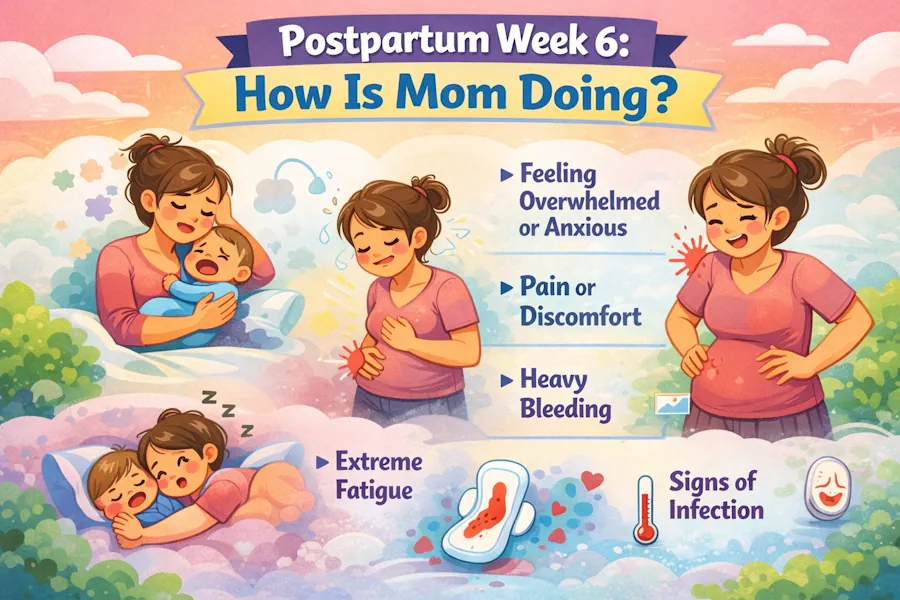
The sixth postpartum week is a significant phase of physical and emotional recovery. During this time, the body continues to heal, and a postpartum medical visit is usually scheduled. Maternal well-being directly affects the ability to care for a six-week-old baby.
Physical Health of the Mother
Common changes include:
- Decreased or resolved postpartum bleeding
- Healing of stitches from vaginal delivery or cesarean section
- Reduced pelvic and abdominal discomfort
Healthcare providers may assess the uterus, cervix, vagina, or surgical incision and provide guidance on resuming physical activity.
Emotional and Mental Health
Mood fluctuations and fatigue are common. However, persistent symptoms such as:
- Ongoing sadness
- Severe anxiety
- Frequent crying
- Lack of interest in the baby or daily activities
may indicate postpartum depression and require professional support.
Sexual Activity and Body Care
Sexual activity is typically considered safe around six to seven weeks postpartum if the mother feels physically and emotionally ready. During breastfeeding, low estrogen levels may cause vaginal dryness, and water-based lubricants can be helpful.
When Should a Six-Week-Old Baby Be Taken to the Doctor?

Most six-week-old babies are healthy, and mild spitting up or irregular sleep is normal. However, medical evaluation is necessary if the baby shows:
- Projectile vomiting
- Poor weight gain
- Unusual lethargy
- Persistent inconsolable crying
- Refusal to feed
- Fever (38°C / 100.4°F or higher)
- Reduced wet diapers
- Abnormal skin color
Frequently Asked Questions (FAQ) About a Six-Week-Old Baby
How much weight should a six-week-old baby gain?
About 20–30 grams per day.
Is vomiting normal at six weeks?
Yes, if weight gain and diaper output are normal.
How many hours does a six-week-old baby sleep?
About 14–17 hours per day, in short intervals.
How often should a six-week-old baby feed?
Every 2–3 hours on average.
How many wet diapers are normal?
At least six per day.
Final Summary
At six weeks of age, babies undergo simultaneous physical growth, digestive maturation, and early sleep pattern development. Mild spitting up, fragmented sleep, and brief fussiness are usually normal. Adequate feeding, steady weight gain, and attentive caregiving are key indicators of health. When concerns arise, consulting a healthcare provider is always the safest approach.







No comment