

Your 5-week-old baby is no longer the fragile newborn of the very first days, yet this stage is still full of questions, concerns, and moments of wonder. The fifth week of life is a period during which many parents notice increased crying, irregular sleep patterns, and worries such as “Is this crying normal?” or “Could my baby have colic?”
At the same time, the mother’s body enters a new phase of recovery during the fifth week postpartum. Fatigue may be slightly reduced, but there is still a strong need for care, patience, and attention to both physical and emotional health.
In this comprehensive guide, written in a clear and trustworthy medical tone, we address the most important topics related to a 5-week-old baby—from normal growth and behavior to crying, colic, and effective soothing techniques. We also briefly discuss the mother’s condition during the fifth week after childbirth and essential care considerations.
If you want to know what is considered normal in the fifth week of your baby’s life and when you should be concerned, this article has been written specifically for you.
What Is the Condition of a 5-Week-Old Baby?
During the fifth week of life, physical and behavioral changes become clearly noticeable for many parents. A 5-week-old baby is more alert than in the earlier weeks, stays awake for longer periods, and responds more actively to sounds, light, and touch. If you feel that your baby is “more aware of their surroundings,” this perception is accurate.

At this age, the baby still does not have a regular sleep–wake pattern, and it is completely normal for nighttime awakenings to occur several times. Many 5-week-old babies experience periods of fussiness or crying during the day, which are often more pronounced in the late afternoon or evening. These behaviors are usually a natural part of neurological development and, by themselves, do not indicate a medical problem.
From a physical standpoint, a 5-week-old baby continues to grow rapidly. Arm and leg movements become more active, and you may notice frequent stretching or opening and closing of the hands while the baby is awake. Neck muscles are still weak, but during short periods of tummy time, the baby may attempt to lift the head slightly.
At this stage, skin-to-skin contact, holding the baby, and responding to crying play a crucial role in creating a sense of safety. Calm and responsive caregiving lays the foundation for secure attachment and emotional regulation in the months ahead.
Overall, if your baby is feeding well, gaining weight, and experiences calm periods in addition to crying, their condition during the fifth week is considered normal.
Growth of a 5-Week-Old Baby (Physical and Behavioral Development)
Despite their small size, a 5-week-old baby is learning and developing every day. At this stage, both physical and behavioral changes gradually become more apparent, and many parents notice increased activity and alertness compared to previous weeks.

Physical Growth of a 5-Week-Old Baby
By the fifth week, most babies show appropriate weight gain and have gained several hundred grams since birth. Length and head circumference continue to increase steadily, reflecting normal brain and body growth.
Movements of the arms and legs become stronger and slightly more coordinated. You may observe your baby kicking more actively or clenching and unclenching their fists. Although movements are not yet fully voluntary, these activities indicate healthy muscular and neurological development.
Neck control remains limited, but placing the baby on their stomach for a few minutes each day (tummy time) helps strengthen the neck and shoulder muscles. Many 5-week-old babies can briefly lift their head for a few seconds.
Behavioral Development of a 5-Week-Old Baby
Behaviorally, a 5-week-old baby shows increased responsiveness to the environment. The baby may gaze at your face for short periods or become calmer when hearing familiar voices. Some babies begin producing short sounds other than crying, which marks the early stages of communication.
Sleep patterns remain irregular, but wakeful periods become longer. During this phase, babies may show increased fussiness at certain times of the day, often related to rapid brain development and heightened sensitivity to environmental stimuli.
Smiling at this age may not yet be fully intentional, but many parents notice brief smiles or facial expressions that suggest the beginning of social interaction.
An Important Note for Parents
Each baby follows a unique developmental path. Comparing your 5-week-old baby to others may lead to unnecessary concern. What matters most is gradual growth, adequate feeding, and responsiveness to the environment.
If your baby is generally active, feeds well, and gains weight appropriately, their development during the fifth week is considered normal.
Crying in a 5-Week-Old Baby: Normal or Concerning?
Crying is the primary means of communication for a 5-week-old baby. At this age, babies cannot express their needs in other ways, making crying both normal and necessary. Many parents during the fifth week wonder whether the amount of crying is normal or a sign of a serious problem.

In reality, crying often increases during the fifth week. The baby’s nervous system is still maturing and lacks the ability to self-soothe effectively. As a result, prolonged crying and fussiness—especially in the late afternoon and evening—are common at this stage.
In most cases, crying in a 5-week-old baby signals hunger, fatigue, the need for comfort, or sensitivity to environmental stimuli such as noise or light. Sometimes babies cry without an obvious reason and are difficult to soothe despite parental efforts. This does not necessarily indicate a medical issue.
However, distinguishing between normal crying and concerning crying is important. If your baby has calm periods between crying episodes, feeds well, and gains weight appropriately, crying is typically part of normal development.
When Can Crying in a 5-Week-Old Baby Be Concerning?
Consult a pediatrician if crying is accompanied by any of the following:
-
Sudden onset of intense, inconsolable crying
-
Crying accompanied by fever, persistent vomiting, or diarrhea
-
Decreased appetite or refusal to feed
-
Noticeable changes in sleep patterns or behavior
-
Crying associated with persistent body arching or pulling the legs toward the abdomen
These signs may indicate conditions such as infection, severe reflux, or other medical issues that require evaluation.
A Reassuring Message for Parents
Excessive crying in a 5-week-old baby is not a reflection of poor caregiving or parental failure. This phase is common and usually improves as the nervous system matures.
Responding to crying, holding the baby, and attempting to comfort them do not spoil the baby; rather, they promote security and trust.
Ways to Soothe a 5-Week-Old Baby

When a 5-week-old baby cries and is difficult to calm, it is natural for parents to feel exhausted and overwhelmed. Fortunately, several strategies can help soothe babies at this age. Every baby is different, and a combination of methods may be most effective.
Swaddling a 5-Week-Old Baby
Swaddling can recreate the secure feeling of the womb. Using a light, breathable blanket and proper technique often reduces crying and promotes calmness.
Important note:
Never place a swaddled baby on their stomach to sleep, and allow periods during the day for free movement of the arms and legs.
Holding and Skin-to-Skin Contact
Babies feel safest in their caregiver’s arms. Skin-to-skin contact, the sound of a heartbeat, and body warmth can significantly reduce crying and promote a sense of security.
Gentle Movement
Many babies are soothed by movement. Gentle rocking, walking while holding the baby, using a stroller, or taking a short walk can be effective. Movement mimics the sensations experienced during pregnancy.
Sucking as a Soothing Mechanism
Sucking is an innate and calming behavior. Offering a pacifier or allowing the baby to suck on a clean finger may help soothe crying even when the baby is not hungry.
Using Soft, Repetitive Sounds
White noise, soft music, the sound of a fan, or gentle singing can be calming for some babies and help reduce crying.
Paying Attention to Hunger and Fatigue Cues
Crying may result from overtiredness or delayed feeding. Recognizing early cues such as fussiness, hand-to-mouth movements, or restlessness can help prevent escalation.
Be Patient and Take Care of Yourself
Soothing a 5-week-old baby is not always quick or easy. If you feel overwhelmed, place the baby safely in a crib and take a few minutes to rest. Parental emotional well-being plays a vital role in infant calmness.
Colic in a 5-Week-Old Baby: Signs and Management

Many parents facing prolonged, intense crying in a 5-week-old baby wonder whether their baby has colic. Colic is one of the most common concerns in early infancy, and understanding it can significantly reduce parental anxiety.
Colic is typically defined as episodes of intense, inconsolable crying that occur without an identifiable cause and are difficult to soothe. It commonly appears between the third and sixth weeks of life, with the fifth week often representing a peak period.
Signs of Colic After the Fifth Week
A baby may be experiencing colic if the following are present:
-
Intense crying lasting more than three hours per day
-
Crying episodes occurring mostly in the evening or at night
-
Arching of the back or pulling legs toward the abdomen
-
Abdominal tightness during crying
-
Difficulty calming the baby even after feeding or holding
Importantly, many babies with these symptoms are medically healthy, and colic does not indicate serious illness.
Is Colic Dangerous for the Baby?
The reassuring news is that colic is generally not harmful and does not reflect poor parenting or underlying disease. Studies show that colicky infants do not experience abnormal increases in stress hormones, and colic does not negatively affect long-term development.
Colic is a temporary phase and usually improves by three to four months of age.
Effective Strategies for Managing Colic in a 5-Week-Old Baby
Helpful approaches include:
-
Using soothing techniques such as swaddling, movement, and white noise
-
Maintaining a calm, low-stimulation environment
-
Responding to crying without guilt or excessive worry
-
Seeking support from family members to reduce parental fatigue
In most cases, drastic dietary changes for the mother or discontinuing breastfeeding do not improve colic. Medications or home remedies should not be used without medical guidance.
When Should You See a Doctor for Colic?
If crying is accompanied by unusual symptoms such as fever, severe vomiting, diarrhea, weight loss, or lethargy, the baby should be evaluated by a pediatrician. The physician will rule out medical causes such as infection or severe reflux before reassuring parents about colic.
A Reassuring Message for Parents
If your 5-week-old baby has colic, you are not alone. This stage is challenging for many families, but it is temporary. Self-care, accepting help, and patience are essential during this period.
When Should You Take a 5-Week-Old Baby to the Doctor?
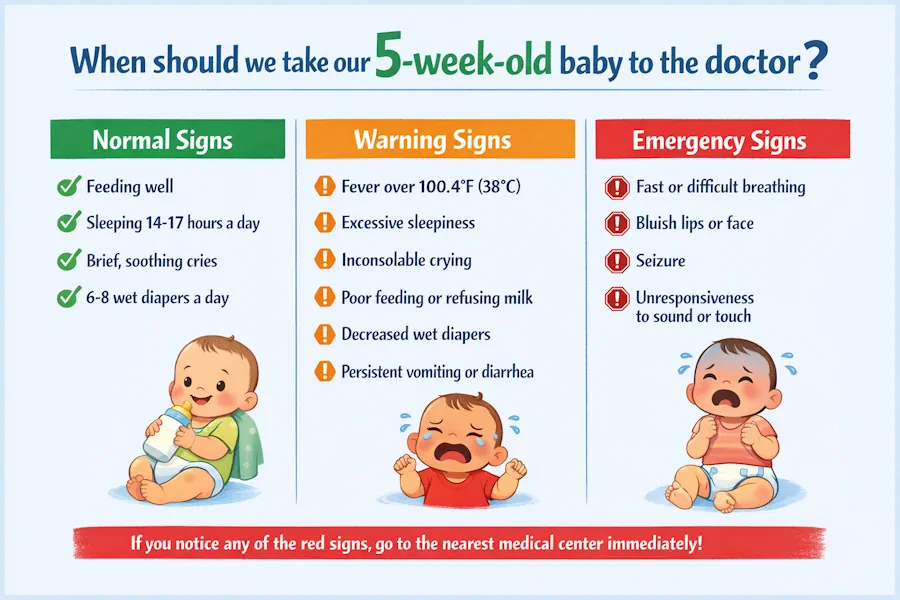
In most cases, behaviors and crying in a 5-week-old baby are part of normal development. However, recognizing warning signs that require medical evaluation helps parents act promptly and confidently.
Seek medical care if any of the following are observed:
Warning Signs in a 5-Week-Old Baby
-
Fever (body temperature of 38°C / 100.4°F or higher)
-
Repeated or projectile vomiting
-
Severe diarrhea or blood in the stool
-
Poor feeding or refusal to feed
-
Poor weight gain or weight loss
-
Unusual lethargy or excessive sleepiness
-
Sudden onset of intense, inconsolable crying
-
Sudden changes in sleep or behavior
-
Difficulty breathing or severe wheezing
These signs may indicate infection, gastrointestinal disorders, or other medical conditions requiring evaluation.
Routine Medical Checkups at This Age
Even in the absence of concerning symptoms, regular pediatric visits are important. During these checkups, the physician:
-
Assesses weight, length, and head circumference
-
Evaluates feeding and sleep patterns
-
Addresses parental concerns
These visits help ensure healthy development in a 5-week-old baby.
Trust Your Parental Instincts
If you feel that something is “not quite right,” even without clear symptoms, consulting a pediatrician is appropriate. Parental intuition often plays an important role in early detection.
Important Tips for Mothers of a 5-Week-Old Baby
5-week-old baby
Caring for a 5-week-old baby extends beyond meeting the baby’s immediate needs; the mother’s well-being plays a critical role in the baby’s comfort and development. The fifth week postpartum is a time when many mothers are still fatigued and adjusting to their new role.
Paying attention to a few simple principles can benefit both mother and baby.
Allow Yourself to Rest
Although uninterrupted sleep may not yet be possible, short periods of rest during the day can help restore energy. Accept help from others whenever possible and rest while the baby sleeps.
Do Not Take Crying Personally
Crying at this stage is a normal part of development and does not indicate poor caregiving. You are learning, and your efforts are meaningful.
Do Not Hesitate to Ask for Help
Caring for a newborn is demanding. Seeking support from a partner, family, or friends is a sign of responsibility, not weakness.
Pay Attention to Your Emotional Well-Being
Mood fluctuations, fatigue, and occasional crying are common postpartum. If feelings of sadness, anxiety, or irritability are intense or persistent, consulting a healthcare professional can be very helpful.
Trust Yourself
You understand your baby more than you may realize. Trusting your maternal instincts and responding to your baby’s needs helps build a secure and healthy bond.
Frequently Asked Questions About a 5-Week-Old Baby
How much should a 5-week-old baby cry?
Crying varies widely, but several hours per day—especially in the evening—can be normal if the baby feeds well and gains weight.
Is excessive crying at 5 weeks always a sign of colic?
Not always. Many babies cry more at this age due to neurological development. Colic involves intense, prolonged, and recurrent crying.
How many hours does a 5-week-old baby sleep per day?
Most 5-week-old babies sleep approximately 14–17 hours per day in short, irregular intervals.
Does holding a 5-week-old baby too much cause spoiling?
No. Responsive holding promotes security and healthy attachment.
What reactions does a 5-week-old baby show?
Babies may respond to familiar sounds, gaze at faces, move more actively, and produce sounds other than crying.
How long does colic last in a 5-week-old baby?
Colic usually improves gradually and resolves by three to four months of age.
When is crying in a 5-week-old baby dangerous?
Crying accompanied by fever, lethargy, repeated vomiting, or behavioral changes requires medical evaluation.
Is pacifier use safe for a 5-week-old baby?
Limited pacifier use is generally safe, especially once breastfeeding is well established.
How much milk should a 5-week-old baby consume?
Milk intake varies by weight and need. Adequate feeding is indicated by regular wet diapers and appropriate weight gain.
Is it appropriate to compare a 5-week-old baby to others?
No. Each baby develops at their own pace; focus should remain on overall health and gradual progress.







No comment