

A 3-week-old baby enters a stage where physical and behavioral changes become more noticeable for many parents. At this age, sleep patterns may change, crying may increase, and parents may notice signs that cause concern. Many mothers and fathers at this stage wonder which changes are normal in a three-week-old baby and which symptoms require medical evaluation.
During the third week of life, the baby’s body gradually adapts to the outside world, and the respiratory, digestive, and nervous systems continue to develop. Understanding normal behaviors at this age can help reduce parental anxiety and prevent unnecessary medical visits—or, conversely, delays in seeking medical care when it is truly needed.
In this article, we provide a comprehensive, step-by-step review of growth in a 3-week-old baby, sleep, feeding, skin condition, breathing, and warning signs, helping parents care for their baby with greater confidence and reassurance.
Growth and General Condition of a 3-Week-Old Baby
At three weeks of age, the baby is still adjusting to life outside the womb. Although growth may seem slow on the surface, important changes in weight, body movements, and neurological responses occur during this period and are essential for parents to understand.

Weight of a 3-Week-Old Baby
Most babies regain their birth weight by the end of the second week. During the third week, gradual weight gain begins, and healthy babies typically gain 20 to 30 grams per day.
If the baby feeds well, has enough wet diapers, and appears active, even modest weight gain is usually normal.
🔹 When should parents be concerned?
If the baby has not yet regained birth weight or weight gain has stopped, consultation with a pediatrician is recommended.
Length and Head Circumference of a Three-Week-Old Baby
At this age, increases in length and head circumference occur more slowly than weight gain. Head circumference growth reflects normal brain development and is usually monitored during routine pediatric checkups. Minor changes in head shape are still normal, especially in babies born through vaginal delivery.
Body Movements of a 3-Week-Old Baby
Movements during the third week are often:
- Sudden
- Irregular
- Accompanied by arm and leg jerking
These movements are related to neurological development and are usually not a cause for concern. The baby may clench fists tightly or pull legs toward the abdomen.
Alertness and Responses
A 3-week-old baby:
- Has brief periods of alertness
- Reacts to loud or sudden sounds
- May stare at parents’ faces, although visual focus is not yet fully developed
These responses are signs of normal nervous system development.
General Behavioral Pattern in the Third Week
At this stage, many parents notice that:
- Crying has increased
- The baby is harder to soothe
This is usually normal and related to the baby’s adjustment to the new environment.
Sleep of a 3-Week-Old Baby
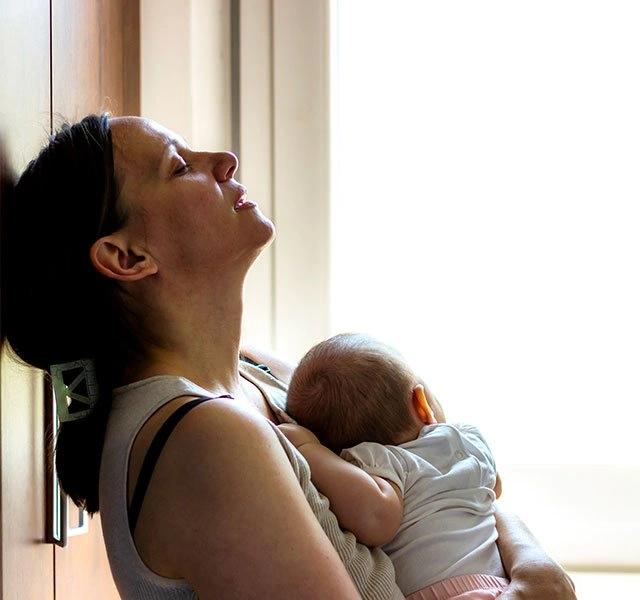
Sleep at three weeks of age is typically irregular and unpredictable, which many parents find exhausting and concerning. At this stage, the baby cannot distinguish between day and night, and sleep patterns are driven primarily by feeding needs.
How Many Hours Does a 3-Week-Old Baby Sleep?
Most three-week-old babies sleep a total of 14 to 17 hours per day, but this sleep is divided into short periods. Typically, the baby:
- Wakes every 2 to 3 hours
- Falls asleep again after feeding
This pattern is completely normal and does not indicate a sleep problem.
Night Sleep of a 3-Week-Old Baby
During the third week:
- Babies do not have long nighttime sleep periods
- Frequent waking for feeding is normal
- Day and night sleep are not yet differentiated
Expecting consistent nighttime sleep at this age is unrealistic and usually does not occur until several months later.
Why Does a 3-Week-Old Baby Wake Frequently?
Common reasons for frequent waking include:
- Hunger
- Gas or digestive discomfort
- Wet or dirty diapers
- Need for comfort and contact
In many cases, the baby may cry without an obvious reason, which is part of normal development.
Safe Sleep Practices for a Three-Week-Old Baby
To reduce potential risks, it is recommended that:
- The baby is placed on their back to sleep
- The sleep surface is firm and flat
- Pillows, blankets, and toys are removed from the sleep area
- The baby sleeps in a separate crib but in the parents’ room
These measures play an important role in preventing sudden infant death syndrome (SIDS).
When Is Sleep Difficulty Abnormal?
Consult a doctor if:
- The baby is extremely difficult to soothe and barely sleeps
- Sleep is accompanied by intense crying or moaning
- The baby feeds poorly or appears lethargic
Feeding a 3-Week-Old Baby
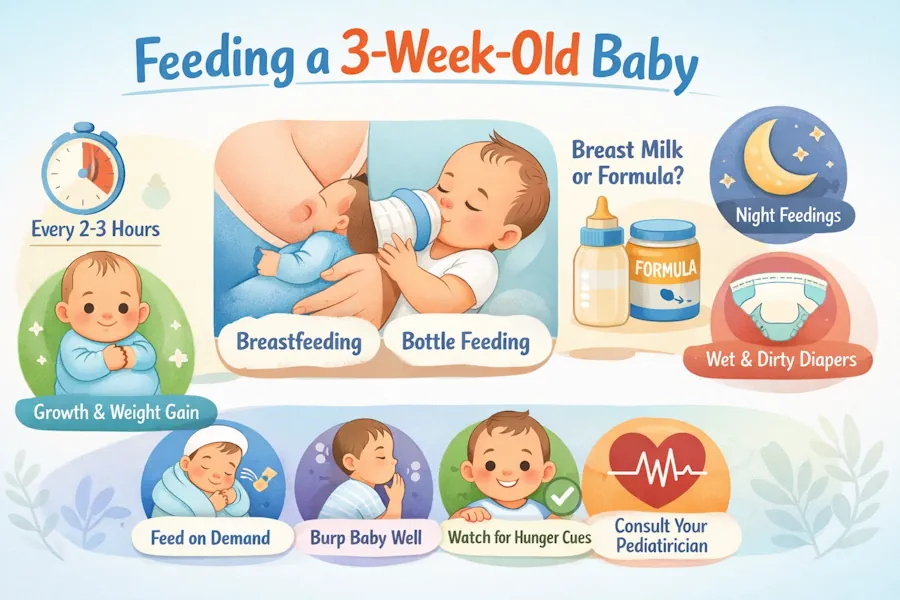
Feeding during the third week of life plays a crucial role in growth, sleep, and comfort. At this age, babies are fed exclusively with breast milk or formula, and any changes in feeding patterns may raise questions for parents.
How Often Does a 3-Week-Old Baby Feed?
Most three-week-old babies:
- Feed every 2 to 3 hours
- Have about 8 to 12 feedings per day
In some days, feeding frequency may increase due to growth spurts, which is completely normal.
Signs That Feeding Is Adequate
If the baby:
- Appears calm after feeding
- Has at least 6 wet diapers per day
- Gains weight appropriately
Then milk intake is likely sufficient, even if feeding seems frequent.
Breast Milk or Formula?
When possible, breast milk is the best option and meets all nutritional needs. However, babies fed with formula can also grow normally if feeding is done correctly and under medical supervision.
📌 At this age:
- Water, herbal teas, or complementary foods are not needed
- Any substance other than milk can be harmful
Spitting Up in a 3-Week-Old Baby
Small amounts of milk regurgitation after feeding are common and usually due to:
- Immature stomach valve
- Swallowing air during feeding
As long as the baby gains weight and is not lethargic, this is usually not concerning.
When Does Feeding Require Medical Evaluation?
Consult a doctor if the baby:
- Refuses to feed
- Has forceful or frequent vomiting
- Fails to gain weight
- Becomes very fussy after each feeding
Crying and Fussiness in a 3-Week-Old Baby
Crying is one of the most common concerns at three weeks of age. Many parents feel their baby cries excessively or is difficult to soothe, while in most cases this behavior is part of normal development.

Why Does a 3-Week-Old Baby Cry So Much?
Common causes include:
- Hunger or frequent feeding needs
- Gas or digestive discomfort
- Fatigue or overstimulation
- Need for comfort and physical contact
The nervous system is still developing, and crying is the baby’s primary way of communicating needs.
Evening Crying in a Three-Week-Old Baby
Many babies:
- Cry more in the late afternoon or early evening
- Are harder to calm during these hours
This pattern, sometimes called “evening fussiness,” is usually temporary and improves with age.
How to Soothe a 3-Week-Old Baby
Effective strategies include:
- Holding and skin-to-skin contact
- Gentle swaddling
- Rocking or walking
- Continuous sounds such as a fan or hair dryer
- Checking diapers and feeding status
Each baby responds differently, and a combination of methods may work best.
When Is Crying Abnormal?
Contact a doctor if crying is:
- Extremely intense or prolonged
- Accompanied by fever, vomiting, or lethargy
- Suddenly different from usual
- Associated with refusal to feed
These may indicate an underlying medical issue.
Breathing of a 3-Week-Old Baby
Breathing patterns at this age may appear unusual or alarming to parents. Rapid breathing, short pauses, or breathing noises are often normal and related to immature respiratory control.

Normal Breathing Pattern in a Three-Week-Old Baby
A baby may:
- Breathe rapidly and shallowly
- Pause briefly between breaths
- Make mild snorting or wheezing sounds during sleep
This pattern, known as periodic breathing, is usually normal and resolves over time.
Are Breathing Pauses Dangerous?
Short pauses lasting a few seconds are generally normal, especially during sleep. The baby’s brain is still learning to regulate breathing rhythm.
📌 This type of breathing is not associated with SIDS.
Nasal Congestion in a 3-Week-Old Baby
Nasal congestion is very common and usually caused by:
- Narrow nasal passages
- Dry air
In most cases, the baby does not have a cold, and the condition resolves on its own.
When Does Breathing Require Medical Attention?
Seek medical care if the baby has:
- Very rapid breathing with chest retractions
- Blue discoloration of lips or face
- Long breathing pauses
- Lethargy or reduced feeding
Skin and Rashes in a 3-Week-Old Baby
A 3-week-old baby’s skin is very sensitive, and visible changes are common. Many rashes seen during the first weeks of life are normal and resolve without treatment.
Skin Pimples in a Three-Week-Old Baby
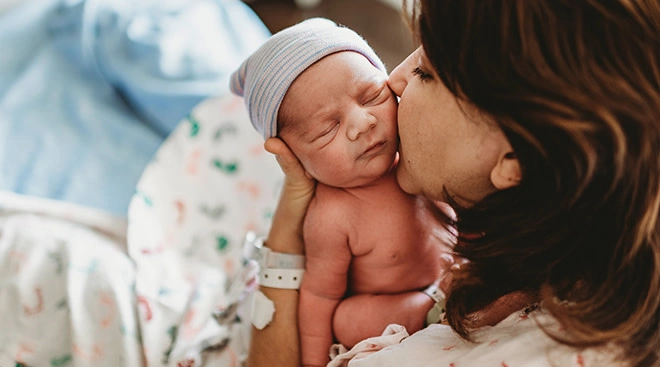
Some babies develop small red or white pimples on the face, neck, chest, or back. These are known as neonatal acne or erythema toxicum and result from skin reactions to maternal hormones.
📌 These pimples:
- Are not contagious
- Are not painful
- Usually disappear within a few weeks
Peeling Skin
Dryness or peeling of the skin, especially on the hands, feet, or scalp, is normal and reflects adaptation to the outside environment.
Cradle Cap in a 3-Week-Old Baby
Some babies develop yellow or white scales on the scalp, behind the ears, or on the eyebrows. This condition, known as cradle cap, is common, harmless, and often resolves without medical treatment.
Diaper Rash in a Three-Week-Old Baby
Although diaper rash is common in infants, it is less typical in babies under one month. Severe redness, sores, or lack of improvement should be evaluated to rule out infection.
When Are Skin Rashes Concerning?
Medical evaluation is recommended if there is:
- Blistering or pus
- Rapid spreading of the rash
- Rash accompanied by fever
- Worsening or persistent lesions
Eyes, Mouth, and Neck of a 3-Week-Old Baby
Many visible changes in the eyes, mouth, and neck are normal at this age and related to gradual muscle and system development.
Eyes of a Three-Week-Old Baby
At this age:
- Eye movements may be uncoordinated
- The baby may appear cross-eyed
- Visual focus is not yet fully developed
These findings are usually normal and improve as eye muscles mature.
🔹 Eye Discharge
Mild yellow or green discharge is often due to a blocked tear duct and usually improves with gentle cleaning.
📌 If the whites of the eyes become red or discharge is thick and persistent, consult a doctor.
Mouth of a 3-Week-Old Baby
The baby’s mouth may show:
- Small sucking blisters on the lips
- Tiny white spots on the gums or palate
These are usually normal. However, white patches that cannot be wiped away may indicate oral thrush, which requires medical evaluation.
Neck of a Three-Week-Old Baby
Neck muscles are still weak, and head support is essential when holding the baby. Full head control is not expected at this age.
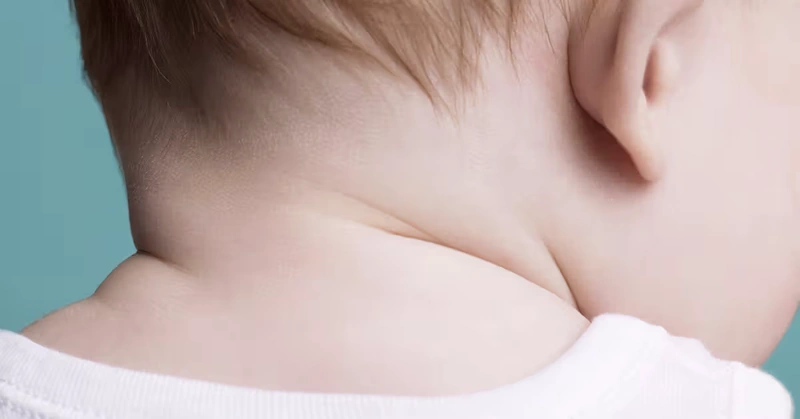
🔹 Redness in Neck Folds
Moisture and skin friction may cause redness or peeling, which usually improves with keeping the area clean and dry.
When Do These Issues Require Evaluation?
Consult a doctor if there is:
- Severe eye redness or purulent discharge
- Spreading white patches in the mouth
- Significant neck stiffness or persistent head tilt
Legs and Motor Development of a 3-Week-Old Baby
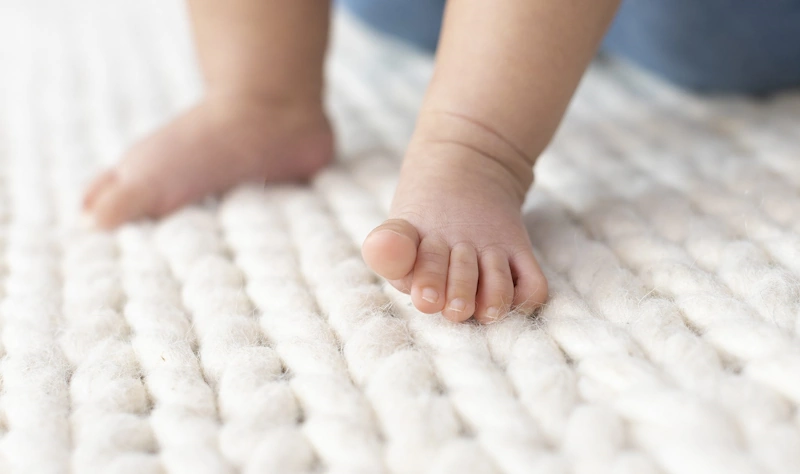
The appearance and movement of the legs may seem unusual to parents. Bent legs, pulling legs toward the abdomen, or sudden limb movements are usually normal and related to fetal positioning and neuromuscular development.
Bent or Inward-Turned Legs
Many babies:
- Have slightly bent legs
- Have feet that turn inward
This is typically due to intrauterine positioning and usually corrects itself with growth and movement.
Bowed Legs in a 3-Week-Old Baby
Mild bowing is normal and does not indicate a skeletal problem. Bones are still soft, and leg alignment changes as the baby begins to sit, stand, and walk.
Sudden Movements and Reflexes
Quick, jerky limb movements are often due to normal newborn reflexes, which indicate a healthy nervous system and gradually diminish over time.
When Do Leg Issues Require Medical Attention?
Consult a doctor if there is:
- Lack of movement in one leg
- Abnormal stiffness or extreme floppiness
- Obvious and persistent deformity
- Pain or crying when legs are moved
When Should You See a Doctor for a 3-Week-Old Baby?
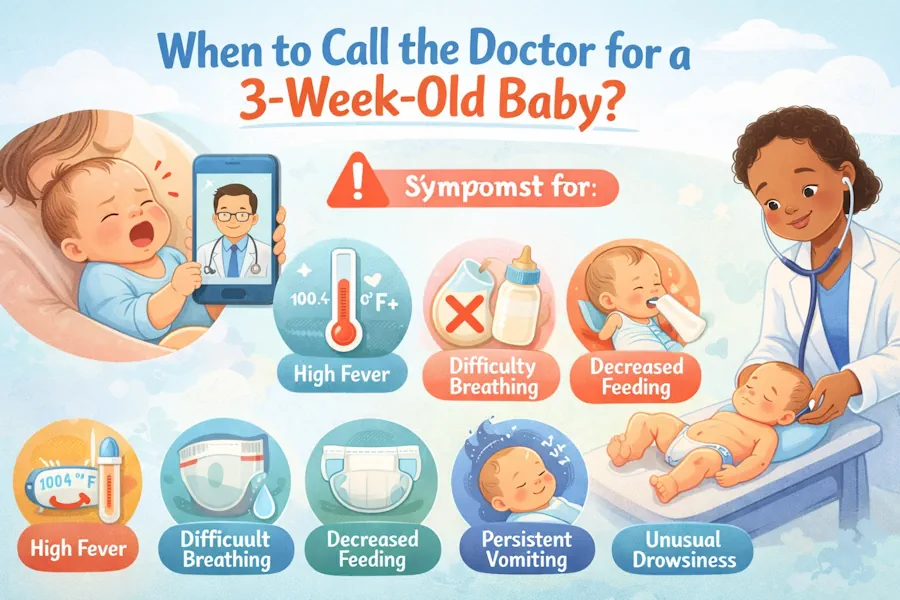
Although many behaviors and changes are normal, certain signs may indicate a medical problem and require prompt evaluation.
Warning Signs in a Three-Week-Old Baby
Seek medical care if the baby has:
- Fever (temperature above 38°C / 100.4°F)
- Lethargy or decreased responsiveness
- Refusal to feed or significantly reduced intake
- Frequent or forceful vomiting
- Fewer wet diapers
- Intense, uncontrollable, or unusual crying
- Labored breathing or bluish lips
- Seizures or abnormal movements
Concerning Skin Changes
These include:
- Rash with fever
- Blisters, pus, or open sores
- Severe or worsening jaundice
Digestive and Bowel Issues
Consult a doctor if there is:
- Frequent diarrhea or bloody stools
- Prolonged constipation with severe distress
- Severe or persistent abdominal bloating
Why Timely Medical Care Matters
In newborns, symptoms can progress rapidly. Early medical evaluation can:
- Prevent serious complications
- Reduce parental anxiety
- Enable timely diagnosis and treatment
Frequently Asked Questions About a 3-Week-Old Baby
How many hours does a 3-week-old baby sleep?
Most sleep 14–17 hours per day, waking every 2–3 hours for feeding.
Is frequent crying normal at three weeks?
Yes. It is common and usually related to hunger, gas, fatigue, or need for comfort.
How often should a 3-week-old baby feed?
Every 2–3 hours, about 8–12 times per day.
Is spitting up dangerous?
Small amounts are normal if weight gain is adequate and vomiting is not forceful.
Is irregular breathing normal?
Yes. Rapid breathing and short pauses are common and usually resolve naturally.
Are facial pimples a sign of illness?
No. They are usually hormone-related and temporary.
When does crying require urgent medical attention?
If accompanied by fever, lethargy, feeding refusal, breathing difficulty, or sudden behavior changes.
Conclusion
A 3-week-old baby is in a sensitive stage of development, and many physical and behavioral changes may concern parents. Irregular sleep, increased crying, skin changes, and variable breathing patterns are often normal and reflect ongoing maturation.
Understanding what is normal—and recognizing warning signs—helps parents care for their baby calmly and confidently and seek medical advice when necessary. Paying attention to feeding, safe sleep, and careful observation plays a vital role in maintaining infant health.
If you are uncertain about your baby’s condition or notice concerning symptoms, consulting a healthcare professional is always the safest and most reliable choice.







No comment