

Most parents are surprised—or even worried—when they see their baby for the first time.
Red skin, bluish hands and feet, facial swelling, or a puffy nose are among the most common changes observed in the first hours and days after birth.
At birth, a newborn’s skin often appears deep red to purplish. This happens due to fetal circulation and the newborn’s adaptation to breathing air. Once breathing begins, the skin color gradually shifts to a brighter red, and in most babies, skin redness starts to fade from the first day onward.
It is also completely normal for a newborn’s hands and feet to appear bluish or slightly purple for a few days. This is usually caused by immature peripheral circulation and, in most cases, does not indicate illness or a serious problem.
In this article, we will clearly and scientifically explain:
-
When does newborn skin redness go away?
-
What causes blue or purple hands and feet in newborns?
-
Which physical changes are normal?
-
When should you seek medical care for a newborn’s appearance?
Blue or Purple Hands and Feet in Newborns: Should Parents Be Concerned?
If you notice that your newborn’s hands or feet appear blue or purplish, there is usually no cause for concern.
This is a common finding in many healthy newborns and is typically due to immature peripheral blood circulation.
During pregnancy, oxygen is delivered through the umbilical cord. After birth, the newborn’s body must independently regulate blood flow throughout the body. This adjustment takes a few days, during which bluish discoloration of the hands and feet is completely normal.
🔹 As long as:
-
The bluish color is limited to the hands and feet
-
The baby is breathing normally
-
The lips and tongue remain pink
-
The baby is alert and feeding well
➡️ No medical intervention is needed.
⚠️ Seek immediate medical attention if:
-
Bluish discoloration spreads to the lips, face, or trunk
-
The baby has difficulty breathing
-
The baby appears lethargic or feeds poorly
The Real Appearance of a Newborn: Wrinkled, Puffy, and Bruised?

If you expected your baby to look like newborns in advertisements—with flawless skin and perfect facial features—you may feel surprised at first.
In reality, the appearance of a newborn baby often includes:
-
Wrinkled skin
-
A cone-shaped head
-
Facial or nasal swelling
-
Red spots or skin rashes
-
Mild bruising
All of these can be completely normal.
These changes are usually caused by:
-
Pressure during labor
-
Transition from the womb to the outside world
-
The newborn’s physical adaptation after birth
Most of these features are temporary and resolve within days or weeks.
Newborns in Movies Are Not Real: Understanding Normal Newborn Appearance
Images of newborns in movies or social media are rarely representative of the first days of life.
Most of those babies are:
-
Several days or weeks old
-
No longer swollen or red
-
Often photographed with special lighting or filters
A real newborn may appear:
-
Slightly bruised or red
-
Wrinkled
-
Covered with temporary skin findings
These features are not signs of illness, but part of the normal adjustment process after birth.
My Newborn’s Face Is Puffy and Bruised—Is Birth the Cause?
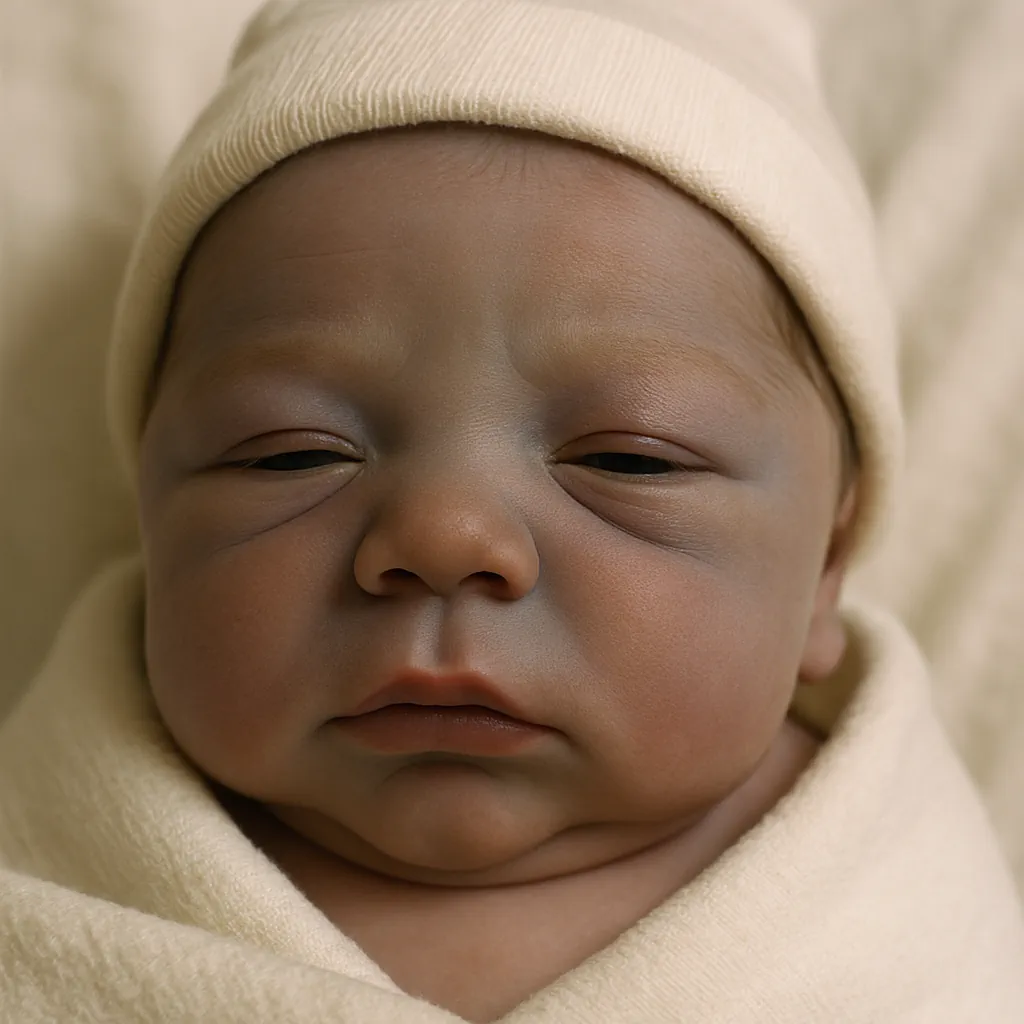
In most cases, yes.
Facial bruising and swelling in newborns are usually the direct result of pressure during labor, especially during vaginal delivery.
Some newborns may have:
-
Swollen eyelids that limit eye opening
-
A wider-appearing nose or ears
-
Mild bruising on the chin or around the mouth
These findings are often caused by fluid accumulation under the skin or mechanical pressure and are typically temporary.
🔹 Prolonged labor or assisted deliveries (vacuum or forceps) may increase these changes.
📌 The good news: Facial bruising and swelling usually resolve on their own without treatment.
How Long Do Newborn Physical Changes Last?
In the first days of life, a newborn may show:
-
Bruising
-
Swelling
-
Facial asymmetry
-
An unusual head shape
Fortunately, most of these changes are temporary.
Typically:
-
Facial bruising fades within a few days
-
Eyelid swelling improves within days to one week
-
Head shape, ears, and nose gradually normalize over several weeks
⚠️ Medical evaluation is recommended if:
-
Swelling or bruising worsens
-
Symptoms persist longer than expected
-
The baby shows fever, poor feeding, or breathing difficulties
When Does a Baby’s Facial Appearance Become Stable?

One of the most common questions parents ask is when their baby’s face will stop changing.
A newborn’s facial appearance naturally changes during the first months due to:
-
Birth-related swelling
-
Fluid redistribution
-
Growth of facial bones and muscles
-
Increasing subcutaneous fat
Typical timeline:
-
First week: Puffy, asymmetric, or bruised face
-
By one month: Swelling subsides, facial features become clearer
-
By 3–6 months: Facial appearance becomes relatively stable
📌 In some cases—especially after difficult labor or in premature infants—full stabilization may take up to one year.
My Baby Has Hair on the Body—Is This Normal? (Lanugo)
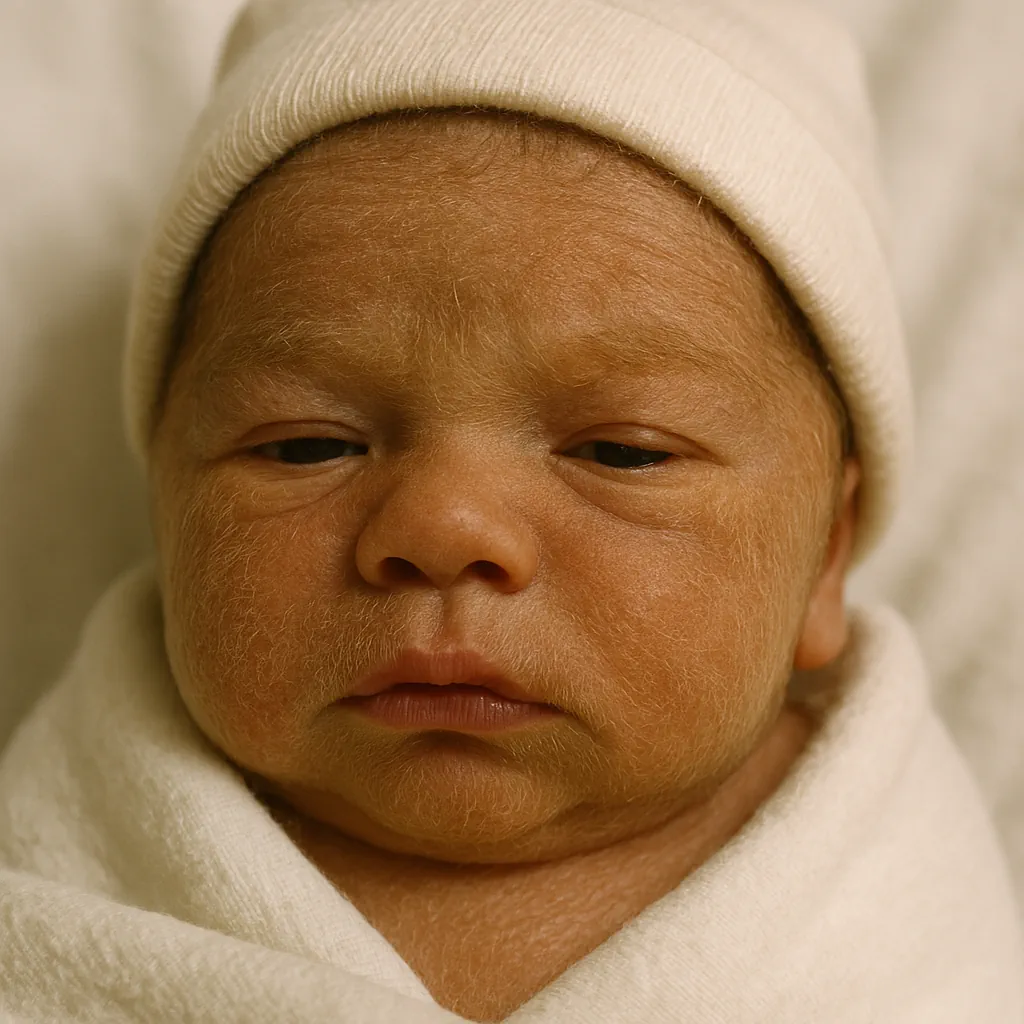
Soft, fine hair on the shoulders, back, ears, or face of a newborn is completely normal.
This hair, known as lanugo, is part of normal fetal development.
Lanugo helps protect the skin in the womb and usually sheds before birth. In some newborns—especially preterm infants—it may still be visible after delivery.
🔹 Lanugo:
-
Is harmless
-
Is not a hormonal or medical disorder
-
Disappears naturally within weeks
Why Was My Baby Born with a White Coating on the Skin? (Vernix Caseosa)
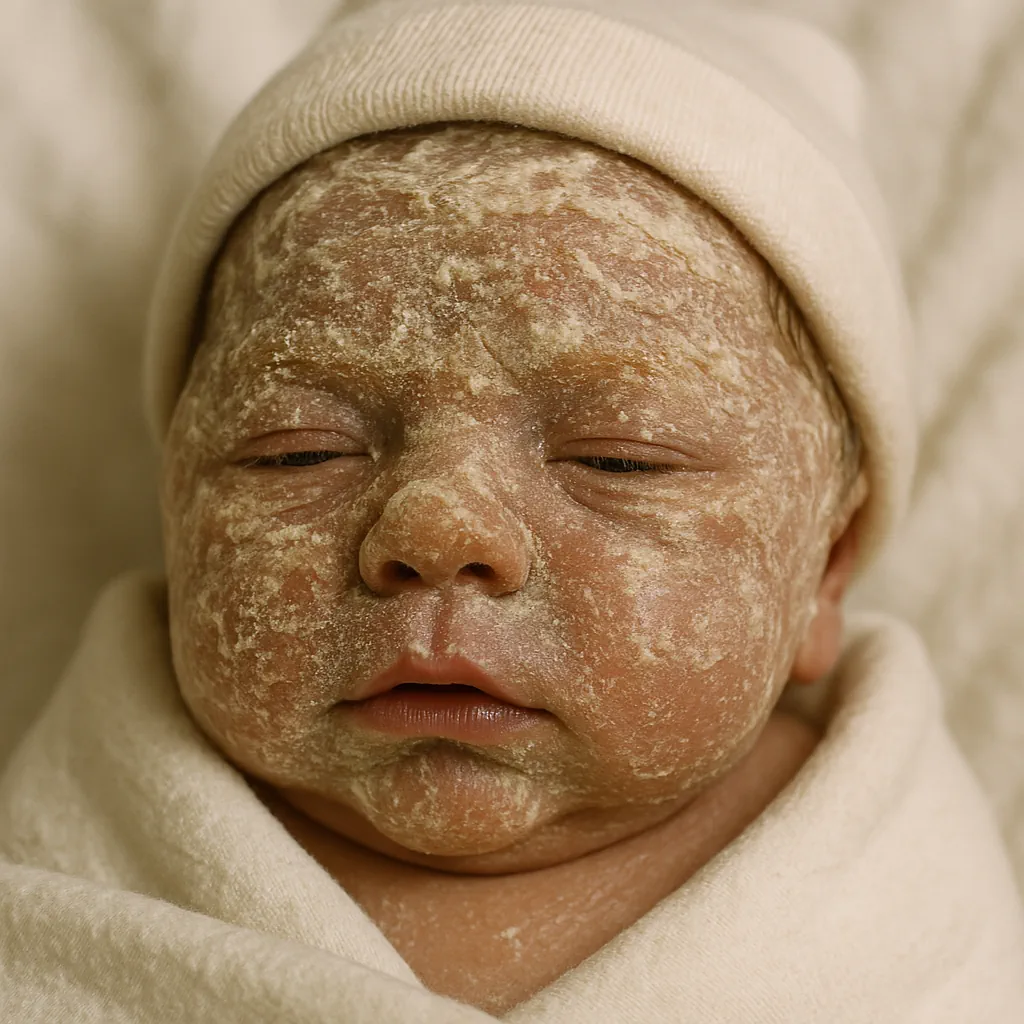
Many newborns are covered with a white, creamy substance, especially in skin folds.
This substance is called vernix caseosa, and it is normal and beneficial.
Vernix:
-
Protects the skin in the womb
-
Keeps the skin moisturized after birth
-
Has natural antibacterial properties
-
Supports immune protection in early life
🔹 It does not need to be removed immediately.
I Feel a Soft Lump on My Baby’s Head—Is It Dangerous?

A soft swelling on one side of a newborn’s head is often a cephalohematoma, caused by pressure during delivery.
Characteristics:
-
Localized swelling
-
Usually painless
-
Skin appears normal
-
Resolves on its own over weeks
⚠️ Medical evaluation is needed only if the swelling enlarges or the baby shows other symptoms.
Red Rashes on Newborn Skin: Should I Worry?

Noticing red rashes, blotchy spots, or small pimples on a newborn’s skin can be alarming for parents. However, in most cases, these skin changes are completely normal and harmless, especially during the first days and weeks after birth.
One of the most common causes of red rashes in newborns is a condition called erythema toxicum neonatorum, a benign and self-limited skin reaction seen in healthy babies.
What Is Erythema Toxicum Neonatorum?
Erythema toxicum neonatorum (ETN) is a common newborn rash that typically appears:
-
Within the first 2–5 days of life
-
In full-term, healthy newborns
-
Without any signs of infection or illness
Despite its alarming name, erythema toxicum is not toxic, not infectious, and not dangerous.
The rash usually looks like:
-
Small red blotches or patches
-
Tiny white or yellowish pimples in the center
-
Scattered or clustered lesions
It commonly appears on:
-
The face
-
The chest and trunk
-
The arms and thighs
Importantly, it does not affect the palms of the hands or the soles of the feet, which helps distinguish it from more serious conditions.
Why Do Red Rashes Appear on Newborn Skin?
Newborn skin is extremely sensitive and must quickly adapt to a completely new environment after birth.
Red rashes often appear as part of this natural adjustment process.
Possible contributing factors include:
-
Exposure to air and temperature changes
-
Contact with clothing, diapers, and bedding
-
Interaction with normal skin bacteria
-
Immature immune and inflammatory responses
Erythema toxicum is thought to represent a normal immune reaction as the newborn’s body begins to respond to its surroundings.
Does a Newborn Rash Require Treatment?
In most cases, no treatment is needed.
Erythema toxicum:
-
Resolves on its own
-
Usually disappears within a few days to one week
-
Leaves no scars or long-term effects
Parents should:
-
Avoid applying medicated creams or ointments
-
Avoid scrubbing or over-washing the skin
-
Use lukewarm water for gentle cleansing
-
Pat the skin dry rather than rubbing
🔹 Do not squeeze or pop the bumps, as this may irritate the skin or cause infection.
When Should Parents Be Concerned?
While most newborn rashes are harmless, medical evaluation is recommended if the rash:
-
Becomes pus-filled or crusted
-
Is accompanied by fever
-
Spreads rapidly or worsens
-
Persists beyond 1–2 weeks
-
Is associated with poor feeding, lethargy, or breathing problems
These signs may suggest an infection or another condition that requires medical attention.
How Is Erythema Toxicum Different from Other Newborn Rashes?
| Condition | Key Features | Treatment Needed |
|---|---|---|
| Erythema toxicum | Red patches with small central bumps | No |
| Milia | White or yellow tiny bumps | No |
| Neonatal acne | Red pimples on cheeks | Usually no |
| Infection | Fever, pus, illness | Yes |
Key Takeaway for Parents
Red rashes on newborn skin are very common and usually harmless.
In healthy babies, erythema toxicum is a sign of normal skin adaptation, not disease.
✨ If your baby is otherwise feeding well, breathing normally, and behaving normally, red rashes alone are rarely a cause for concern.
When in doubt, always consult your pediatrician—but rest assured, most newborn rashes resolve naturally with time and gentle care.
When Does a Baby’s Skin Color Stabilize?

In most infants:
-
Skin color gradually moves toward its natural tone between 3 and 6 months of age
-
In some babies, minor changes in skin tone may continue until around one year of age
These gradual changes are part of normal skin maturation as pigment production stabilizes.
What Factors Influence a Newborn’s Skin Color?
The primary factors that determine a baby’s skin color include:
-
Genetic traits inherited from both parents
-
The amount of melanin produced by skin cells
-
Ethnic background and family history
Factors that do not influence a baby’s skin color include:
-
Maternal diet
-
Breastfeeding
-
Bathing frequency
-
Use of creams or oils
📌 Common beliefs such as “a baby’s skin will turn white” or “breast milk changes skin color” have no scientific basis.
Key Takeaway for Parents
If a newborn’s skin becomes slightly lighter or darker during the first months of life, this change is usually a normal part of skin development, not a sign of illness or nutritional deficiency.
✨ A baby’s true skin tone is primarily determined by genetics and becomes clearer with time as the skin matures.
Is Blue Discoloration on a Newborn’s Skin Dangerous? When Should Parents Be Concerned?

Seeing blue or purplish discoloration on a newborn’s skin—especially on the hands, feet, or occasionally around the lips—can be concerning for parents. However, in many cases this finding is completely normal.
During the first days after birth, a newborn’s circulatory system is still immature and gradually adapting to life outside the womb. As a result, blood flow to the peripheral parts of the body may be less efficient, causing:
-
Bluish or purplish discoloration of the hands and feet
-
More noticeable color changes in cold environments or during sleep
🔹 This condition is known as neonatal acrocyanosis and is usually benign and self-limited.
📌 As long as the blue discoloration is limited to the hands and feet and:
-
The newborn is breathing normally
-
The tongue and inside of the mouth remain pink
-
The baby is alert and feeding well
➡️ There is generally no cause for concern.
When Is Blue Skin Color in a Newborn a Cause for Concern?
In rare situations, blue discoloration of the skin may indicate inadequate oxygenation and requires immediate medical evaluation.
⚠️ Seek urgent medical care if:
-
Bluish discoloration involves the lips, tongue, or entire face
-
The entire body appears bluish or gray
-
The baby has difficulty breathing or rapid, labored respirations
-
The newborn becomes unusually lethargic, poorly responsive, or excessively sleepy
-
Feeding is impaired
In these circumstances, prompt assessment by a pediatrician or emergency medical services is essential.
Important Note for Parents
Most cases of bluish hands and feet in newborns are normal and temporary, resolving as the circulatory system matures.
However, blue discoloration of the lips, face, or trunk is not normal and should never be ignored.
What Does Mottled or Marble-Like Skin in Newborns Mean?
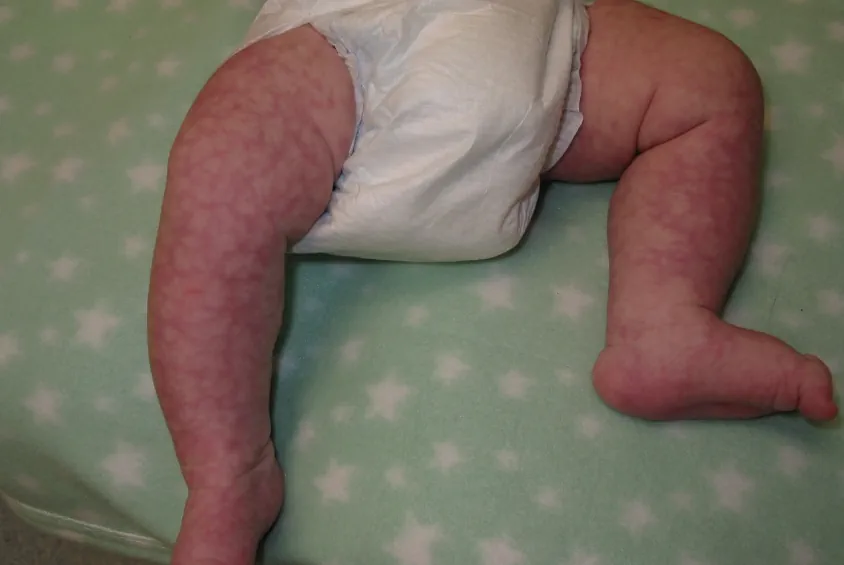
Some parents notice that their newborn’s skin—especially on the hands, feet, or trunk—develops a lacy, mottled, or marble-like pattern. While this appearance can be concerning at first, it is completely normal in most cases.
This condition, commonly referred to as mottling, mottled skin, or cutis marmorata in newborns, usually occurs due to:
-
Immature temperature regulation
-
Instability of superficial blood circulation
-
Exposure to a cooler environment
Is Mottled Skin in Newborns Normal?
Yes, in most healthy newborns, mottled skin is a benign and temporary finding.
🔹 Mottled or marble-like skin:
-
Is commonly seen during the first days or weeks after birth
-
Often becomes more noticeable when the baby is cold or undressed
-
Resolves when the baby is warmed
-
Is not a sign of disease
When Should Mottled Skin Be a Cause for Concern?
Although mottled skin is usually harmless, medical evaluation is recommended if the condition:
-
Persists continuously and does not improve with warming
-
Is accompanied by lethargy, fever, or poor feeding
-
Extends beyond the extremities and affects large areas of the body
➡️ In these cases, a pediatrician should assess the newborn to rule out underlying medical conditions.
Key Takeaway for Parents
In a healthy newborn, mottled or marble-like skin is temporary and harmless, resolving on its own as the nervous system and circulatory control mature.
📌 With growth and improved regulation of body temperature and blood flow, this skin pattern typically disappears without any treatment.
White or Yellow Bumps on My Newborn’s Nose: Is This Normal?

If you notice small white or yellow bumps on your newborn’s nose, cheeks, or around the mouth, this is completely normal and usually not a cause for concern.
These tiny bumps are called milia, and they are among the most common skin findings in newborns during the first weeks of life.
What Causes Milia in Newborns?
Neonatal milia develop due to a temporary blockage of the skin’s sebaceous (oil) glands. These glands are still immature and have not yet fully adapted to life outside the womb.
🔹 Milia are:
-
Not infectious
-
Not painful or itchy
-
Not a sign of allergy or skin disease
They represent a normal phase of skin adaptation in newborns.
How Long Do Milia Last in Newborns?
In most babies:
-
Milia appear within the first few weeks after birth
-
They resolve spontaneously within a few days to several weeks
-
No treatment is required
As the newborn’s skin matures and the oil glands begin to function normally, milia disappear on their own.
Important Advice for Parents
📌 Do not:
-
Squeeze or pop the bumps
-
Apply creams, ointments, or cosmetic products
-
Scrub the skin aggressively
✅ What you should do instead:
-
Gently cleanse the baby’s face with lukewarm water
-
Use a soft cloth
-
Allow the skin to heal naturally
How to Distinguish Milia from Acne or Skin Infection
Milia:
-
Do not have surrounding redness
-
Do not produce pus
-
Are not associated with fever or general illness
⚠️ Seek medical advice if the bumps:
-
Become red, inflamed, or pus-filled
-
Are accompanied by fever, irritability, or poor feeding
-
Do not improve over time
In such cases, evaluation by a pediatrician is recommended to rule out other skin conditions.
Key Takeaway
Milia are a normal, harmless, and temporary skin finding in newborns. With gentle care and time, they will disappear without any intervention.
Why Does My Newborn’s Head Look Long or Unusual?
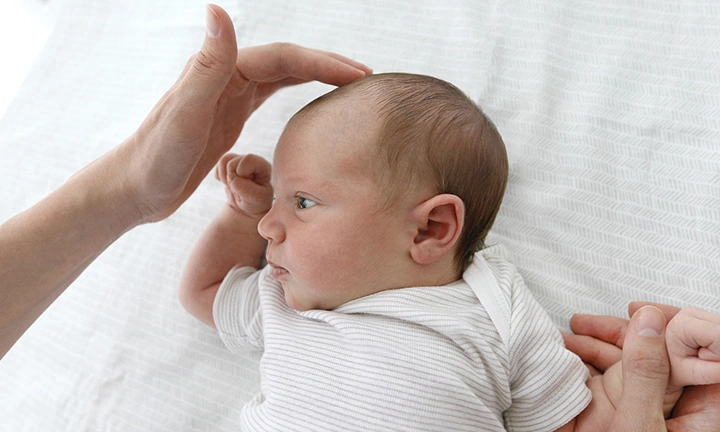
If you notice that your newborn’s head appears elongated, cone-shaped, or slightly asymmetrical after birth, in most cases there is no cause for concern.
This is considered one of the common and normal physical changes following delivery.
During birth—especially vaginal delivery—a newborn’s head is subjected to pressure while passing through the birth canal. Because the bones of the newborn’s skull are not yet fully fused and are connected by flexible sutures and soft membranes (fontanelles), the skull is highly adaptable and can temporarily change shape.
🔹 This important feature:
-
Allows the baby to pass safely through the mother’s pelvis
-
Protects the developing brain during birth
However, as a result, the newborn’s head may appear unusually shaped in the first days after birth.
📌 This finding is more common after vaginal delivery and is usually less noticeable in babies born by cesarean section.
Will My Baby’s Head Shape Return to Normal?
Yes—almost always.
In most newborns:
-
An elongated or asymmetrical head shape
-
Gradually improves within the first few days to weeks of life
-
Corrects itself without any medical intervention
As the baby grows:
-
The skull bones naturally shift into a more typical position
-
The head shape becomes more rounded and symmetrical
When Should an Abnormal Head Shape Be Evaluated?
⚠️ Medical evaluation is recommended if:
-
Head asymmetry worsens over time
-
The head shape does not improve after several months
-
The baby shows additional symptoms such as severe irritability, recurrent vomiting, or poor growth
In these cases, a pediatrician should examine the infant to rule out underlying conditions.
Key Takeaway
Temporary changes in a newborn’s head shape are a normal part of the birth process. With time and growth, the head typically returns to a natural and symmetrical shape.
What Is the Soft Spot on a Newborn’s Head and How Should It Be Handled? (Fontanelle)
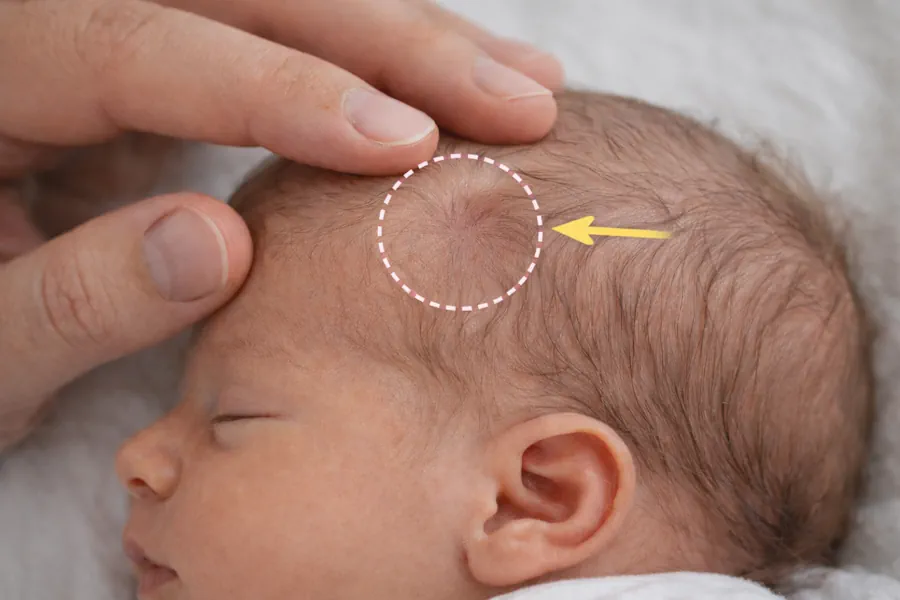
When gently touching a newborn’s head, parents may notice a soft, slightly sunken area on the top of the head.
This area is called the fontanelle, and it is completely normal.
Fontanelles are the spaces between the bones of a newborn’s skull that have not yet fully fused. This flexible structure allows:
-
The baby’s brain to grow easily during the first months of life
-
The head to adapt during birth, enabling safe passage through the birth canal
Is It Dangerous to Touch a Baby’s Fontanelle?
No.
Despite common concerns, the fontanelle is protected by a strong membrane, and gentle touching does not pose any risk to the baby’s brain.
🔹 Important points to remember:
-
Light, gentle touch is safe
-
There is no need to press or manipulate the area
-
Feeling a gentle pulsation is completely normal and reflects normal blood flow
How Many Fontanelles Do Newborns Have and When Do They Close?
Most newborns have two main fontanelles:
Anterior (Front) Fontanelle
-
Located at the top of the head
-
Larger in size
-
Typically closes gradually between 12 and 18 months of age
Posterior (Back) Fontanelle
-
Located at the back of the head
-
Smaller in size
-
Usually closes by around 2 months of age
📌 Closure of the fontanelles occurs gradually, and the exact timing may vary among infants.
When Should a Newborn’s Fontanelle Be Evaluated by a Doctor?
Although fontanelles are normally harmless, medical evaluation is recommended in rare cases if:
-
The fontanelle appears significantly sunken, which may suggest dehydration
-
The fontanelle becomes bulging or unusually firm
-
The fontanelle closes much earlier or much later than expected
➡️ In these situations, a pediatrician should examine the baby.
Key Takeaway
The fontanelle is a natural, essential, and important part of newborn development.
The only thing parents need is knowledge and reassurance—not worry or unnecessary intervention.
Newborn appearance: Everything Improves Over Time
Seeing bruising, skin redness, wrinkles, small rashes, facial swelling, or an unusual head shape in a newborn can be concerning during the first days of life. However, in most cases, these changes are completely normal and temporary.
After birth, a newborn’s body is:
-
Adapting to life outside the womb
-
Gradually recovering from the physical pressure of the birth process
-
Adjusting multiple body systems, including the skin, circulatory system, and bones
For this reason, most considering physical changes in newborns resolve naturally within days to weeks.
📌 All that is needed is a little patience:
-
Swelling gradually subsides
-
Skin color becomes more even and natural
-
The head and facial features become more symmetrical
-
The baby’s appearance becomes increasingly familiar and beautiful each day
Very soon, you will see the baby that makes people stop beside the stroller, smile, and admire with joy.
✨ Give yourself and your newborn time—nature knows exactly what it is doing.







No comment