

At this stage, many parents notice new changes in the behavior, sleep patterns, crying, and growth of a 4-week-old baby. A four-week-old infant gradually becomes more aware of the surrounding environment, and their sensory responses are more noticeable than in previous weeks. This article provides a comprehensive overview of the baby’s condition in the fourth week, including physical and sensory development, as well as the most important things parents should do during this period.
Baby’s condition in the fourth week of life (What changes occur in a 4-week-old baby?)

In the fourth week of life, the baby enters a stage in which they gradually move beyond the very early newborn phase and begin to show more conscious responses to their environment. A four-week-old baby still spends most of the time sleeping, but during periods of wakefulness, they are more alert and establish better connections with sounds and faces. At this age, many parents notice changes in the sleep pattern, crying, and movements of their 4-week-old baby, all of which are completely normal.
Behavioral changes in a 4-week-old baby
At four weeks of age, a baby may cry more frequently than in previous weeks. This crying is not always a sign of hunger and may be related to fatigue, a need for physical contact, or sensitivity to light and sound. A one-month-old baby may briefly focus on their parents’ faces and respond to familiar voices. These behaviors indicate the early development of social interaction.
Physical development of the baby in the fourth week
In the fourth week, weight and length gain continue steadily. Most babies at this age have gained a noticeable amount of weight compared to their birth weight. Arm and leg movements are still mostly involuntary, but kicking movements become stronger. Neck muscles remain weak, so proper head and neck support is essential when lifting a 4-week-old baby.
Level of alertness and responsiveness in a one-month-old baby
A four-week-old baby shows greater awareness of the environment during awake periods. The baby may respond to light, sound, or movement and focus for a few seconds. This increased alertness reflects normal brain development in a one-month-old baby. Speaking softly and making eye contact can help strengthen these developing skills.
Sleep of a 4-week-old baby (How much does a four-week-old baby sleep?)

Sleep in the fourth week of life is still irregular, which is completely normal. A 4-week-old baby sleeps an average of 14 to 17 hours per day, but this sleep occurs in short and fragmented periods. Most four-week-old babies do not yet distinguish between day and night and may wake up several times during the night.
Sleep pattern of a baby in the fourth week
A four-week-old baby usually sleeps for about 2 to 4 hours at a time and then wakes up to feed. Some babies may have shorter naps during the day and become more unsettled in the evening. These changes are part of the natural development of the baby’s nervous system and are not a cause for concern.
Why does a one-month-old baby wake up frequently at night?
A one-month-old baby has a very small stomach and becomes hungry quickly, which makes frequent nighttime awakenings normal. In addition, a baby’s sleep cycle includes a higher proportion of light sleep compared to adults, so the baby can easily wake up due to light, noise, or mild hunger.
Can sleep be regulated in a 4-week-old baby?
In the fourth week of life, expecting a regular sleep schedule is not realistic. However, parents can help gradually shape healthy sleep patterns by following simple measures. Keeping the environment dim at night, minimizing interaction during nighttime diaper changes, and placing the baby in a calm environment can help the baby begin to differentiate between day and night. Nevertheless, irregular sleep at this age is entirely normal.
Crying in a 4-week-old baby and its causes

Crying is one of the primary means of communication for a baby in the fourth week of life. A 4-week-old baby cannot yet express needs in other ways, and crying is completely normal. At this age, many parents notice an increase in crying or fussiness in a four-week-old baby, which usually does not indicate a serious problem.
Common causes of crying in a four-week-old baby
In the fourth week, crying may occur for various reasons. Understanding these causes helps parents remain calmer and respond more effectively:
Hunger: A one-month-old baby becomes hungry frequently, and crying may be the first sign.
Fatigue or sleepiness: A 4-week-old baby cannot yet self-soothe and may cry when overtired.
Need for physical contact: Many babies at this age calm down when held or cuddled.
Wet diaper or physical discomfort: Even minor discomfort can lead to crying.
Evening crying and colic in a 4-week-old baby
Some four-week-old babies experience prolonged crying episodes in the late afternoon or evening, commonly referred to as evening crying or colic. During these episodes, the baby may draw their legs up or appear very restless. Colic is usually temporary and gradually improves as the baby grows.
When is crying not considered normal?
If crying in a 4-week-old baby is accompanied by symptoms such as fever, severe lethargy, refusal to feed, or crying that is very intense and difficult to soothe, consultation with a pediatrician is necessary. In most cases, however, crying is a normal part of a baby’s development.
Growth and weight of a 4-week-old baby

In the fourth week of life, a baby’s growth continues at an appropriate pace. A 4-week-old baby has usually surpassed their birth weight and shows more consistent weight gain compared to the first weeks of life. Nevertheless, growth and weight gain vary among infants and are influenced by factors such as nutrition and genetics.
Normal weight of a baby in the fourth week
Most one-month-old babies gain approximately 600 to 800 grams compared to their birth weight. This weight gain indicates adequate milk intake and healthy growth in a four-week-old baby. If the baby feeds regularly, produces a normal number of wet and dirty diapers, and appears active, there is usually no cause for concern.
Length and head circumference growth in a four-week-old baby
By the fourth week, length typically increases by about 2 to 3 centimeters compared to birth. Head circumference also gradually increases, reflecting normal brain growth. These parameters are assessed and recorded by the pediatrician during routine check-ups.
Is the growth of a 4-week-old baby normal?
Growth is considered normal when weight and length increase steadily over time, even if the exact measurements differ from average values. Comparing babies to one another is not an appropriate measure; the most important indicator is consistent growth and overall health.
The five senses of a baby in the fourth week
In the fourth week of life, the baby’s five senses become more active, and the baby begins to better perceive the surrounding environment. A 4-week-old baby does not yet have full control over all senses, but responses to light, sound, smell, and touch are more evident than in previous weeks. Sensory development at this stage forms the foundation for future learning in a one-month-old baby.
Vision in a 4-week-old baby
A four-week-old baby still has limited vision and can best see objects at a distance of approximately 30 to 45 centimeters. The baby responds more strongly to high-contrast patterns, such as black-and-white images or simple designs. At this age, brief eye contact with parents is a sign of normal visual development.
Hearing in the fourth week
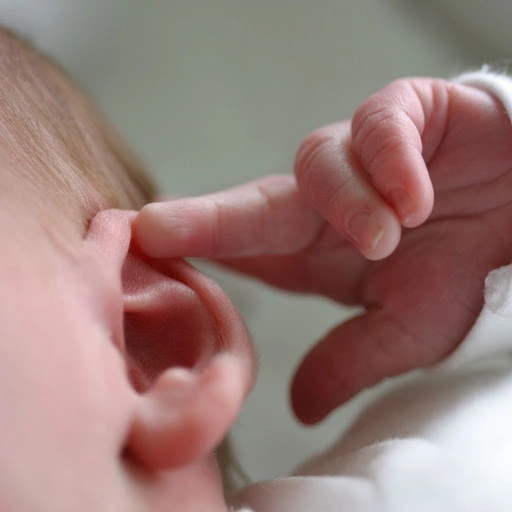
Hearing in a 4-week-old baby has improved compared to birth. The baby can recognize familiar sounds, especially parental voices, and may become calmer when hearing them. Loud or sudden noises may trigger reactions such as blinking or limb movements, which are completely normal.
Sense of smell and taste in a four-week-old baby

The sense of smell in a one-month-old baby is active from birth and remains important in the fourth week. The baby can recognize the mother’s scent and respond to it. Babies also show a preference for sweet tastes, which aligns with feeding on breast milk or formula.
Sense of touch and physical contact in a 4-week-old baby
Touch is one of the most important senses in a four-week-old baby. Skin-to-skin contact, holding, and gentle stroking can promote a sense of safety and calm. Many babies at this age settle more quickly with physical contact, leading to reduced crying.
Feeding a 4-week-old baby (How often does a one-month-old baby feed?)

In the fourth week of life, Breastfeeding remains central to the baby’s growth and health. A 4-week-old baby is usually fed exclusively with breast milk or formula, and feeding schedules may still appear irregular. This is completely normal and reflects the high nutritional needs of a one-month-old baby.
How often does a 4-week-old baby feed?
Most four-week-old babies feed every 2 to 3 hours. Some babies may request feeds more frequently at certain times, especially in the evening or at night, a pattern known as cluster feeding. This behavior is normal and supports growth.
Hunger cues in a one-month-old baby
Before intense crying begins, a 4-week-old baby often shows early hunger cues, including:
-
Sucking on hands or lips
-
Turning the head from side to side
-
Fussiness or making sounds
Recognizing these cues helps make feeding calmer and more effective.
Duration of feeding in a one-month-old baby
Feeding duration varies among babies. Some babies are satisfied within 10 to 15 minutes, while others require more time. More important than duration are signs such as relaxation, releasing the breast or bottle, and becoming drowsy after feeding, which indicate adequate intake.
Is feeding sufficient in a 4-week-old baby?
If a four-week-old baby:
-
Gains weight appropriately
-
Produces regular wet and dirty diapers
-
Appears calm after feeding
feeding is usually adequate. If there are concerns about intake, consultation with a pediatrician or lactation consultant is recommended.
Important things to do in the fourth week of life (A checklist for parents)
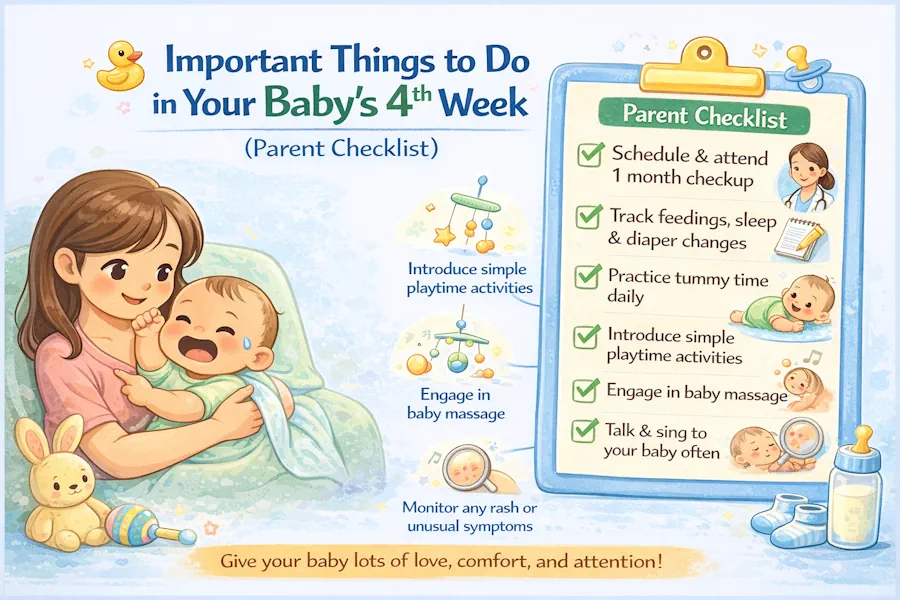
In the fourth week of life, performing several simple but important tasks can support better growth and greater comfort for a 4-week-old baby. This checklist helps parents manage the essential needs of a four-week-old baby without stress or confusion.
Monitoring feeding in a 4-week-old baby
-
Ensuring the baby feeds regularly
-
Monitoring the number of wet and dirty diapers
-
Observing hunger and satiety cues in a one-month-old baby
Supporting sleep and comfort in a four-week-old baby
-
Providing a calm, dimly lit sleep environment
-
Always placing the baby on their back to sleep
-
Accepting that irregular sleep patterns are normal at this age
Monitoring growth and health in a one-month-old baby
-
Tracking weight and length gain
-
Observing responsiveness, alertness, and movement
-
Attending scheduled pediatric check-ups
Strengthening bonding and sensory development in a 4-week-old baby
-
Speaking gently to the baby during awake periods
-
Making brief eye contact
-
Using touch and physical contact to promote a sense of security
Watching for abnormal signs in a four-week-old baby
-
Intense and inconsolable crying
-
Fever, lethargy, or decreased appetite
-
Sudden changes in sleep or feeding patterns
If any of these signs are observed, consultation with a pediatrician is essential.
When should a 4-week-old baby be taken to the doctor?

In most cases, a 4-week-old baby is healthy, and fussiness or crying is normal. However, certain signs require medical evaluation and should not be ignored. Being aware of these signs helps parents seek timely care when necessary.
Signs that require immediate medical attention
If any of the following symptoms are observed in a four-week-old baby, parents should contact a pediatrician promptly:
-
Fever above 38°C
-
Severe lethargy or unusual sleepiness
-
Refusal to feed or significantly reduced intake
-
Intense, inconsolable crying
-
Breathing difficulty, wheezing, or bluish discoloration of the lips
-
Repeated or green-colored vomiting
-
Seizures or abnormal movements
Signs that require non-urgent medical evaluation
Some symptoms are not emergencies but should still be assessed by a physician:
-
Inadequate weight gain or growth توقف
-
Jaundice persisting beyond the early weeks
-
Severe diarrhea or constipation
-
Unusual or persistent skin rashes
-
Eye infections or abnormal discharge
Routine check-ups at four weeks of age
Around one month of age, a routine visit is usually scheduled to assess growth, weight, length, and head circumference. During this visit, the pediatrician evaluates feeding, sleep, and overall development and provides guidance as needed.
Frequently asked questions about a 4-week-old baby
How much should a 4-week-old baby sleep?
A 4-week-old baby typically sleeps 14 to 17 hours per day. Sleep occurs in short, irregular periods, and nighttime awakenings are completely normal.
Is frequent crying normal in a four-week-old baby?
Yes, crying in the fourth week is usually normal. A one-month-old baby uses crying to express needs such as hunger, fatigue, or a desire for physical contact. Evening crying is also common at this age.
How often does a 4-week-old baby feed?
Most four-week-old babies feed every 2 to 3 hours. At certain times, feeding frequency may increase, which is normal and supports growth.
What should the weight of a 4-week-old baby be?
A one-month-old baby typically gains 600 to 800 grams compared to birth weight. The overall trend of weight gain and general health is more important than the exact number.
When should a 4-week-old baby be taken to the doctor?
If symptoms such as fever above 38°C, severe lethargy, refusal to feed, inconsolable crying, or breathing difficulties occur, the baby should be evaluated by a doctor promptly.







No comment